
Gerard Deane warns Regional Balance Bill may be our ‘one shot’ to tackle geographical inequality
Gerard Deane has warned Stormont’s proposed new Regional Balance Bill may represent a once-in-a-generation opportunity to tackle geographical inequality across the North.
"The risk of not doing this right is something that we should also be looking at because if we don't do it right now - I have a fear that this is our one shot - and that if we don't do this right now there will be decades’ more regional imbalance in this place and that is something we can't afford collectively,” said the leading Derry community leader.
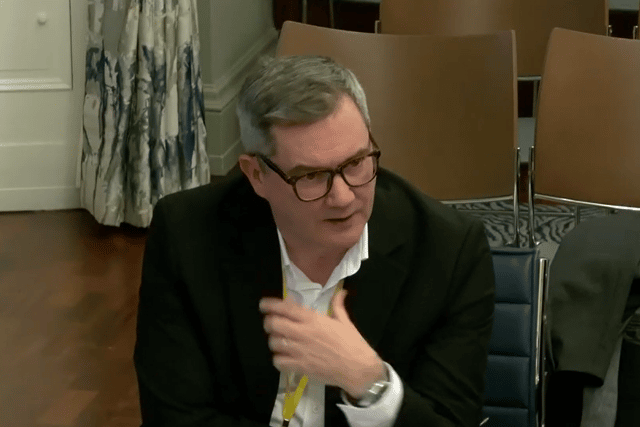
Mr. Deane made the remarks during a briefing of the Stormont Economy Committee, which he attended on Wednesday as a trustee of the Community Foundation for Northern Ireland.
He was part of a delegation providing evidence on SDLP MLA Sinéad McLaughlin’s Bill which will establish a Regional Balance Strategic Framework (RBSF) aimed at addressing economic disparities between different regions in the North.

Also in attendance was Dr. Mairead McCormack of Glenshane Community Development Ltd.
The Dungiven-based community organisation was founded in 1989 to promote community wealth, create employment and secure a stronger economic future for the North Derry area.
Dr. McCormack, who has led the GCD since 1998, said the organisation supported Mrs. McLaughlin’s Bill
“Regional disparities still persist. We welcome the proposed RBSF with departmental responsibilities, funding plans, measurable targets and timescale
“It offers an opportunity to make regional balance a sustained responsibility across the whole of the Executive,” she stated.
However, Dr. McCormack insisted that inequalities within council areas should also be taken into consideration as the legislation is progressed.
“Dungiven and its local hinterland cannot be assumed to share the same circumstances of larger settlements such as Coleraine and Ballymoney just because we are within the same council area.
"An improving council-wide average may conceal communities where investment remains limited and access to opportunity has changed very little,” she said.
This was echoed by Mr. Deane during his contribution to the discussion.
"Some significant inequalities exist between neighbourhoods located within the same council area,” he said.
He added: “If we are monitoring only at the broad regional level improvements in one part of an area can mask disadvantage elsewhere.
“We would therefore encourage the committee to consider how councils and other public bodies can support the delivery of the strategic framework at the neighbourhood level as well.”
The Bill proposes measurable statutory targets to ensure Executive Departments are achieving progress on addressing regional balance.
Dr. McCormack said the legislation should consider impediments to employment, economic growth and the emigration of young people from local communities as well.
"Measurement should capture practical barriers such as journey times to employment and training, child care availability, broadband reliability, affordable premises and access to services.
"Youth out-migration also matters where young people must leave to secure suitable employment the consequences descend to local businesses, the future workforce and community sustainability,” she told the committee.
Mr. Deane agreed that capturing youth movement would be a useful measure.
He also suggested addressing regional imbalance was a long-term project.
“This can't be seen as something that is going to change for people within a mandate of an Executive. That's not the case. There is a real longitudinal approach here,” he declared.