
Western Trust urges people to act FAST for Stroke awareness
The Western Trust has urged people to familiarise themselves with signs of a stroke, and is asking the public to memorise the F.A.S.T. campaign.
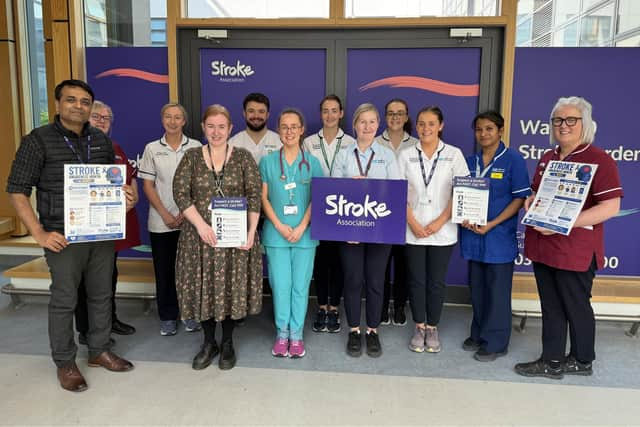
This May, the Western Health and Social Care Trust Stroke Teams are supporting the Stroke Associations Campaign ‘Make May Purple’ to raise awareness of stroke.
FAST stands for:
F- Face: Has their face fallen on one side? Can they smile?

A- Arms: Can they raise both arms and keep them there?
S- Speech: Is their speech slurred or difficult to understand?
T- Time: Time to call 999 immediately.
A Western Trust spokesperson said: “A stroke is a medical emergency, recognising the signs and acting FAST can save lives and reduce long-term disability.
"Every minute matters, the sooner treatment is given the better the chances of recovery.
"Our dedicated teams are here every step of the way, from our acute stroke team providing urgent, lifesaving care to our rehabilitation staff supporting recovery in hospital and our Community Stroke Team helping patients regain independence at home.
"Stroke can affect anyone, at any age don’t wait, and don’t ignore the signs. Let us work together this Make May Purple to spread awareness, save lives, and support our community."
The Public Health Agency states that strokes claim the lives of around 1,000 people each year in Northern Ireland and has also recently reminded people to ‘think FAST’ if they suspect someone is having a stroke.
Dr Joanne McClean, Director of Public Health at the PHA, said: “Stroke is an attack on the brain. It happens when the blood supply to a part of the brain is cut off and brain cells are damaged or die. Stroke is a common cause of death and disability in Northern Ireland with approximately 2,800 new strokes here every year. While the majority of strokes occur in people over the age of 65, it can strike at any age, with 25% occurring in people under the age of 65.”
THe PHA advises that people can reduce the risk of having a stroke by: knowing and managing personal risk factors such as high blood pressure, diabetes, atrial fibrillation (irregular heart beat) and high blood cholesterol; exercising regularly and maintaining a healthy weight; reducing alcohol consumption; stopping smoking.