
Derry’s first shipyard and the beginnings of what would become a major economic force
The 1700s saw minor ship repairing and building on the Foyle. But from 1830 to 1922 Derry had a succession of five substantial shipyards on its riverfront.
During the 1820s the Chamber of Commerce had complained: “We are yet without a ‘wet’ dock or ‘dry’ dock or even a slip, upon which vessels may undergo repair”.
So in 1830 Pitt Skipton, a member of the Harbour Board, and Dungiven man John Henderson, ex-Royal Navy commander, reclaimed land between Strand Road and the river, north of what is now Lower Clarendon Street and, at a cost of £4,000 (c£400,000 now), and they built a patent slipway. Ships up to 300 tons weight could now be repaired locally, instead of having to go to Glasgow or Liverpool.
The slipway clearly met a need. In 1834 it repaired 31 vessels; in 1835, 33 vessels; and in 1836, 29 vessels. In 1835 they built a brigantine - called ‘The Sir Robert Alexander Ferguson’ after the city’s then MP who would later put his weight behind the creation of Londonderry Port & Harbour Commissioners and move control of the port from the gentry to local merchants.
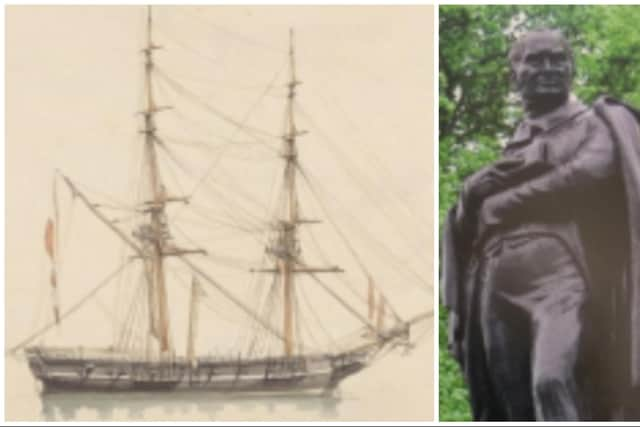

In 1839 Skipton sold the yard to Captain William Coppin, the energetic innovator. He built at least 13 ships, moving from wood to iron; and from sail to steam power.
The shipyards were to become a major force in Derry’s economy, employing 2,000 men in 1918 when the city population was only about 30,000.
‘Thunder & Clatter: The History of Shipbuilding in Derry’ by Gerald Hasson: Guildhall Press: 1997.