
Continental trip - Derry Motoring with Jim Mc Cauley
For those of us heading to Continental Europe in our own car, or intending to hire one at source, there is an awful lot to consider. There are the items and documents that we should take with us and then the need to familiarise ourselves with local rules and regulations.
Basic document requirements are driving licence, including the Northern Ireland paper counterpart, an international driving permit where necessary, vehicle registration document (V5C) and insurance certificate. Cover should be provided for two drivers if possible, to share driving on longer routes or in the event of illness. If your vehicle is hired or leased in any region of the UK, then you require a VE103 certificate. You will also need to check if your driving licence covers category BE if you are towing a trailer. Taking your own car, European breakdown cover is important from companies such as the AA, RAC or GEM.
If you intend to fly and then hire, the best deal and guarantee that a car is ready for you, is to order well in advance on line. Most established companies will have the necessary safety items in the car, and it is advisable to read the details in the hire agreement. Take out additional insurance cover if you feel it necessary. The insurance company may ask for driving licence information and you can share this by getting a licence ‘check code’ on the ‘Gov. UK’ site before travelling and is valid for up to 21 days. Check for extras you might require such as child seats or sat nav upgrade for a more basic car.
Budgeting a road trip abroad is another key consideration, according to the motoring organisation GEM. It’s easy to underestimate the cost of toll roads across Europe where a return motorway journey from the UK to the south of France, for example, can easily exceed £200 in toll charges alone, depending on the route and vehicle type.
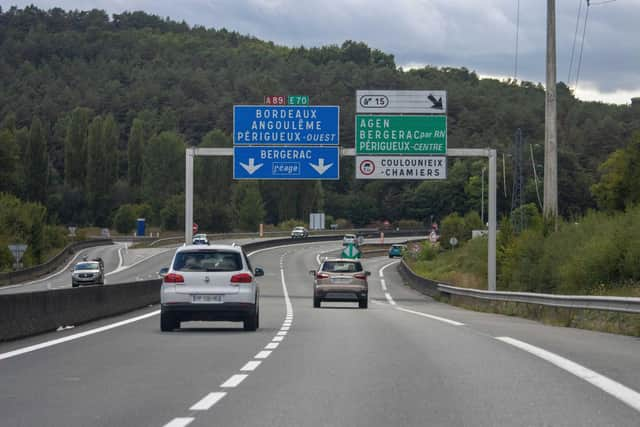

Planning routes in advance and understanding payment methods - such as cash, card or electronic toll tags - can prevent unnecessary stress and drastically reduce time spent queuing to pay at the toll plaza. Carrying a reasonable amount of cash is also advisable because of on the spot fines for simple missed considerations such as not having correctly fitted beam correctors or no country ID on the registration plate or separate sticker.
Depending on country, compulsory on-board items include warning triangles, hi-vis jackets, first aid kits, additional pair of driving glasses, light bulb replacement sets and approved single use breathalysers.
It makes sense to familiarise yourself with local driving laws before you set off. Differences in speed limits, priority rules, low emission zones and mandatory equipment can lead to on the spot fines if ignored. For anyone venturing into any of the French low‑emission zones you require a ‘Crit’Air’ vignette (clean air sticker). This must be ordered in advance from the official French Government site.
Finally, don’t drink and drive. It is worth remembering that the vast majority of European countries have lower legal blood alcohol limits than the UK. Some even operate zero‑tolerance rules for certain driver groups.
Current requirements for individual countries can be obtained on line from any of the major motoring organisations.