
Derry’s ‘Boyhood Fire’ – compelling new history of Na Fianna Éireann
On August 16, 1909 the Irish National Boy Scouts (Na Fianna Éireann) was formed by two nationalist activists, Bulmer Hobson and Countess Constance Markievicz, as an alternative to directly counteract the influence of Sir Robert Baden-Powell’s Boy Scout movement in Ireland.
Na Fianna Éireann membership was open to male children from eight years old to eighteen, regardless of class, creed or political party. While the Fianna was initially for boys, some girls did join, although, by 1922, membership had been limited to boys aged between twelve and eighteen.
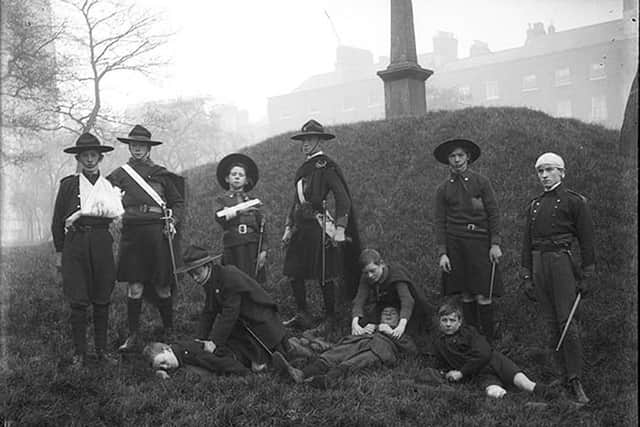
Each member was given the title Fian (warrior) and the boys were offered a combination of military training, outdoor pursuits and Irish cultural activities. The aim of the semi-military movement was to train the youth of Ireland for armed conflict against British rule.
The Irish Volunteers were formed in Dublin in November 1913. Young men who were in the Fianna and had gained experience in the organisation were subsequently appointed as Volunteer officers.

The expertise of the Fianna in military training was much sought after by the Volunteers, as many had several years’ training in military drill, signalling and weapons handling.
On April 24, 1916, 1,600 men, women and children assembled in Dublin and proclaimed an Irish Republic. They occupied a series of locations around the city that had been chosen for their strategic importance.
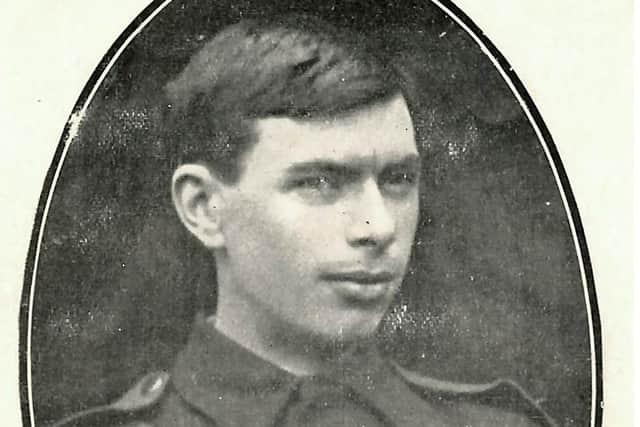
Dozens of the rebels were youthful members of Na Fianna Éireann. During Easter Week the Fianna took part in all the major fighting in the city and four of them were killed in action – including fourteen-year-old Seán Healy, the youngest rebel to die in the Easter Rising.
A Fianna branch, or sluagh, was formed in Derry in 1914, but did not last too long due to insufficient funding, opposition from other national organisations and pressure from the Catholic Church.
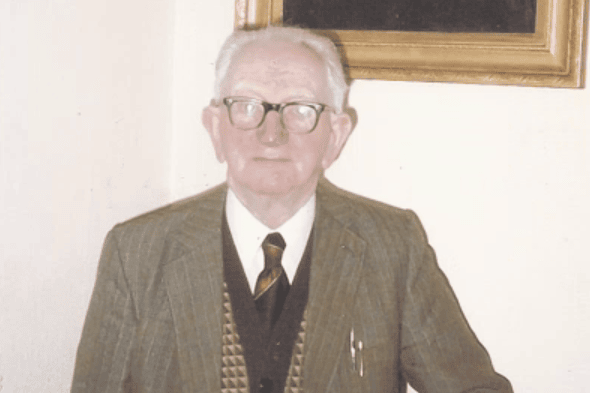
Liam Brady, from Waterloo Street, joined the Derry Na Fianna Éireann at fourteen years of age, when the organisation was being reformed the following year in preparation for the Easter Rising.
He said: “The strength of our organisation in 1915 was about twenty-six. We met several nights a week to carry out the primary objects of the Fianna, which were the training of the youth of Ireland, mentally and physically, by teaching scouting and military exercises, Irish History and the Irish language.
"Each member took the following declaration:- ‘I promise to work for the Independence of Ireland, never to join England’s armed forces and to obey my superior officers’.
"We learned all about the Lee-Enfield rifle and when our members came of age they were to be transferred to the Volunteers."
Derry did not experience the scale of sectarian violence that ravaged Belfast, but in June 1920 twenty people lost their lives in a week of bitter conflict.
The city would not see large scale rioting until August 12, 1969, when the Apprentice Boys’ march escalated into the Battle of the Bogside.
Catholic Bogside sealed itself off with barricades and petrol bombs, defending the area from both loyalist mobs and B Specials. The RUC lost control of the city and had to call on the British Army to help to restore order.
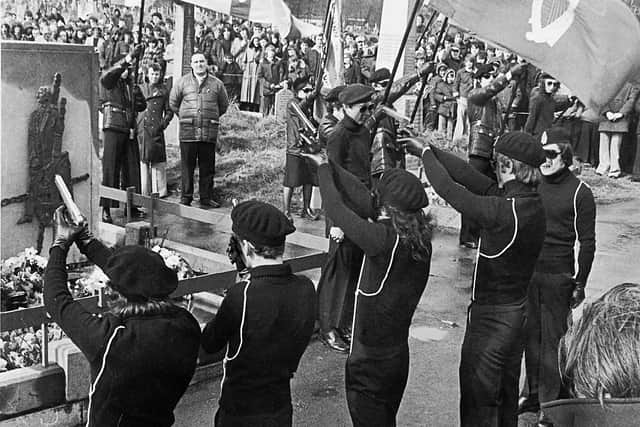
After the split in the Republican movement Neil O’Donnell reorganised the Provisional-aligned Na Fianna Éireann in Derry; Eddie McSheffery was another of the main organisers.
The IRA campaign was slow to start in Derry and consisted mainly of commercial bombing attacks and organised riots, in which many Fianna members took part, although officially Na Fianna members were prohibited from rioting.
On March 1, 1971, a gang of youths threw petrol bombs at a British military police Land Rover as it slowed for the junction of Cable Street and Westland Street in the Bogside.
The Land Rover burst into flames, went out of control and crashed into a wall. One military policeman died; two others managed to get out alive.
This was the first British Army fatality in Derry, and from then on the campaign of republican violence increased.
Recruits for the Fianna, both boys and girls, came largely from young, working-class Catholic strongholds in Belfast, Derry, Armagh, Tyrone and Down.
On Sunday, January 30, 1972, soldiers of the Parachute Regiment ran amok in Derry, shooting dead thirteen unarmed civilians and wounding a further sixteen attending a civil rights march.
Among the fatalities was Fianna member Gerry Donaghy (17), who had tried to rescue the fatally-wounded Jim Wray and was shot point-blank by a paratrooper.
A month later in Derry Gerry Doherty (16), of Broadway, Creggan, of the Official Fianna, was found seriously injured in an empty building in Central Drive.
A nurse, Jean Donohue, told the inquest into his death that she had gone in and ‘saw a boy lying on the bottom floor of the building. The boy did not say anything but started roaring.’ He had been accidentally shot in the chest and died after being admitted to Altnagelvin Hospital.
Gerry Doherty’s funeral was attended by around 3,000 people, including Bernadette Devlin, MP.
On May 19, 1972, Fianna member Manus ‘Manny’ Deery (15) was shot dead by a British soldier. He was standing by an archway at the Bogside Inn sharing a bag of chips with friends when a soldier in an observation post high up on Derry’s walls fired a single shot.
The bullet ricocheted off the archway wall and fragments hit Deery in the back of the head. RTÉ reporter Kevin Myers was coming out through the door of the pub when the shot rang out.
He hit the ground instinctively and when he got up he was a matter of feet away from where Deery was lying in a pool of blood.
Myers said: “Manus was lying on the ground to my left. This all happened in a fraction of a second … I immediately went back into the pub. The people inside the pub thought they were under attack from some other quarter.
"I then went back out to the location of the shooting and saw a young man being given the kiss of life. He had a terrible head injury, which he could not have survived.” Manus Deery died instantly.
The British Army claimed the soldier was firing at a gunman, but this was a fabrication, and an inquest in 2017 cleared Deery, saying he was ‘totally innocent’ and was not posing a threat to anyone.
Two teenagers, Bernard ‘Brian’ Coyle and Eddie McSheffrey, were the driving force behind the Fianna in the Bogside and Brandywell areas.
They were dissatisfied with what they felt was a limited role for the Fianna and were constantly lobbying the IRA for more responsibility.
Coyle was preparing an attack on a British Army raiding party when a blast bomb he was about to throw at soldiers exploded prematurely in in June 1976. He was rushed to Altnagelvin Hospital but pronounced dead on arrival. He was seventeen.
Eddie McSheffrey met the same fate, when he was killed in a premature explosion in 1987.
Six of the ten hunger strikers who died in 1981 were former members of the Fianna, including Patsy O’Hara, who had joined the Fianna when he was eleven and was shot in the leg by a British soldier in 1971 while manning a barricade in the Bogside.
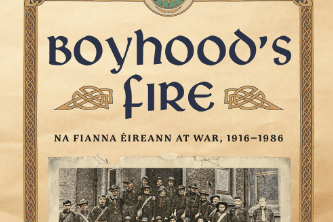
James Durney’s new book 'Boyhood's Fire. Na Fianna Eireann at war, 1913-1986’ is available from all good book shops and online. Visit: https://www.irishacademicpress.ie/product/boyhoods-fire-na-fianna-eireann-at-war-1916-1986/