
Sowing seed potatoes, beans and carrots outdoors - Gardening with Brendan
While St Brigid's Day abd the ancient Celtic Imbolc festival on February 1 traditionally heralds the start of spring in Ireland, it is the feast day of another of the national three patrons, St Patrick (our own St Columba / ColmCille being the third, of course) that really fires the starting pistol on the cycle of rebirth and renewal for gardeners.
Traditionally, the first grass mowing only happens after St Patrick's Day on March 17 and it is also an ideal time to start sowing most vegetables, flowers and fruits, and even your shamrocks.
This is because half-hardy or tender seedlings will need a good six to eight weeks before they are ready to be hardened off and planted outside in May after the last frosts have passed, or for those slightly hardier plants which can be direct sown, to give them a chance to slowly germinate, acclimatise and take root so they are well established and used to their surroundings before the soil warms up and they take off in earnest.
With the spring equinox now having arrived and the 12 hours of daylight marker having passed, it's a good time to get going, and with a few days off this past week and some lovely spring sunshine I've been sowing a few dozen different flowers, herbs and vegetables indoors and outdoors.

Flowers and herbs I've sown this week indoors include mini sunflowers, painted daisies, California poppies, cosmos, basil, thyme, clary sage, chrysanthemum, as well as second batches of petunias, calendula and cornflower.
I'd managed to germinate some of my father's old vegetable seeds which were around 14 years old last year and so I'm experimenting again with some of the other seeds which went out of date in 2012, this time courgette, leeks, carrots, spring onions and beetroot.
This week I’ve been sowing some fresh rainbow carrot, fennel, runner, french and broad beans and winter squash seeds. I've also got four seed potato varieties I'm starting in grow bags.
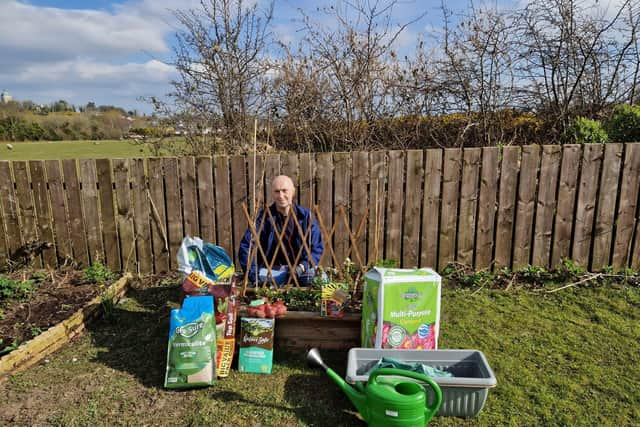
Having bought a small raised bed in Home Bargains for £29.99, I filled it with compost and topsoil mixed last summer and grew sprouts and radishes in it. This year I've amended the soil with some fresh compost, topsoil and some vermiculate to help with drainage and moisture retention and added in a diluted solution of the mineral rich seaweed fertiliser I made last year as well as some dry seaweed slow release fertiliser.
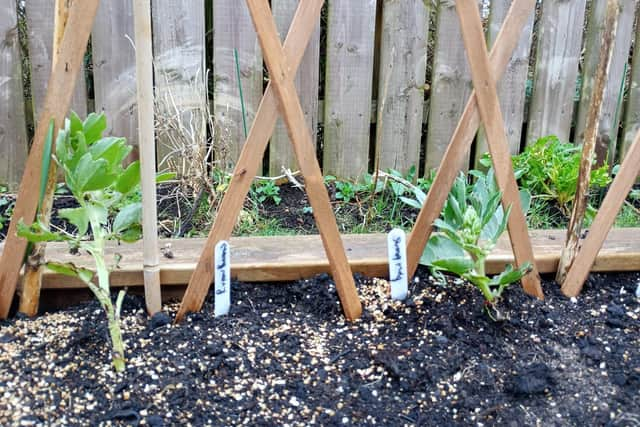
The liquid fertiliser was basically just seaweed left in a big bin topped with water over the winter.
At the back of the raised bed I added a trellis and sowed a row of the different beans. In front of this I dug an inch deep trench row and sprinkled in the old leek seeds, and then two shallower trenches for the older carrot seeds and the new rainbow carrot seeds, before covering the seeds back over as none of these need light to germinate.
Potatoes can be grown in the ground, in deep containers or in grow bags. Grow bags are super cheap and widely available and the bonus is they don't take up much room.
They usually have handles so can be moved about easily enough and are permeable so will allow water to drain off.
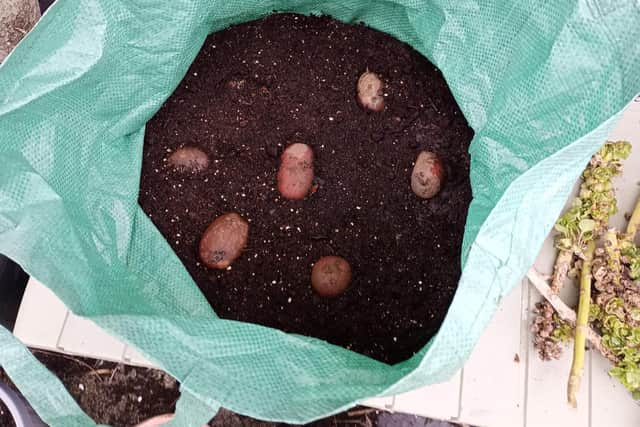
I'm planning to create a new patch for the garden for spuds and hopefully sweetcorn, but for now I'm using grow bags and using the same mix of topsoil, compost, vermiculite and seaweed fertiliser.
I've never grown seed potatoes before but I know someone who has and they advised adding a relatively shallow layer of soil at first and setting the seed spuds in longways on their sides with the eyes of the potatoes facing upwards as this is where the shoots with their lush green foliage will emerge from. As the shoots come up, you then continue to bury them gradually with additional layers of compost over time. Within a few months some of them should be ready for harvesting, hopefully...