
Bedding down for the winter with a jump start for next year - Gardening with Brendan
The garden may look bare and barren at this time of year as autumn turns to winter and the first frosts arrive, but beneath the fading foliage you can end the gardening year by getting a jump start for 2026 by beginning the new cycle early and planting out young plants that can withstand, and even benefit from, the cold dark days ahead before springing to life early when the days start to lengthen in late February into March.
The trick is finding plants that will survive the winter here in Ireland and through trial and error over the last few years I've whittled it down to a selection of plants I know can tolerate the wind, rain and frost and have planted hundreds of tiny seedlings out in the ground over the past two months.
These include seed-grown hardy vegetables like Brussel Sprouts, Broccoli, Radish and Swiss Chard, and flowers such as Oriental Poppies, Cornflowers, Wallflowers, Calendula, Alyssum, Pansies, Lunaria and Canterbury Bells. Many of those plants at the moment are tiny and while they won't put on much growth above ground now they will develop strong root systems beneath the ground. I've also dug in a lot of different bulbs bought at bargain prices in late summer such as Lily, Iris and St Brigid's Anemones for a splash of colour early colour next spring.
There are other plants too that can be grown on in the unheated plastic greenhouse or cold frame over winter as this will always be a few degrees warmer that the air outside. I've young Echinacea, Rudbeckia, Agastache, Pinks, Sweet Pea and Gaillarda plants in there just for a little bit of protection from the first frosts as they are still very small. These plants likewise won't put much growth on over the winter but will become much sturdier for having gone through the colder weather and should be ready for transplanting early in the spring.
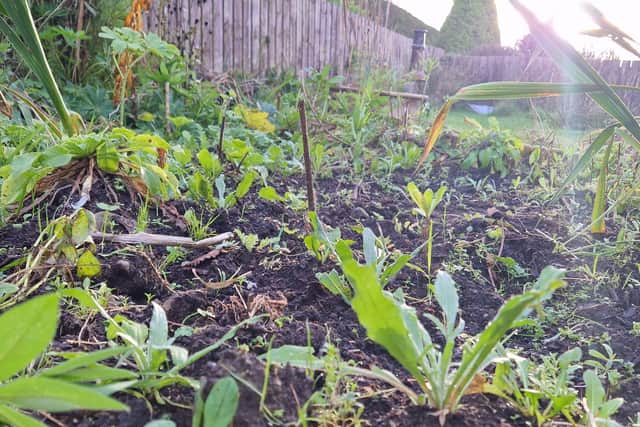

As well as providing some ground cover and something to look forward to over winter, the great thing about having these young plants now is that at this time of year they are much less prone to being damaged or killed by slugs, snails and insects that would normally feed on young tender plants.
The only other thing I did to round out this season was give those young plants a liquid feed with diluted home-made seaweed fertiliser that has been marinating in a big bin for the best part of a year. I've also added some wood shavings / saw dust mulch around the perennial bed to help protect the young plants there, feed the newly dug bed and prevent weeds from taking over.
As the sun began to dip as I tidied around and put the shovel and spade away for another year last week I looked around the garden and saw a little robin sitting watching me from a bare branch as a shaft of sunlight through the grey illuminating the last flower to bloom, a solitary pure white gladiola. It felt like a sign of some sort – heralds of the winter to come maybe - and a fitting scene to bring the gardening season to a close for 2025. Till next year!