
Supercharging garden soil health and plants with seaweed: Gardening with Brendan
Often people spend a small fortune on fertiliser and soil amenders to help their garden grow but an old tradition in Ireland of collecting and distributing seaweed could save you quite a bit of money and net results that are potentially far better than any shop bought solution.
Most of us on our small island live near or on the coast and there are countless spots where seaweed washes up in abundance along it.
The idea to collect and add seaweed into the garden was not my own. My parents did it years ago in their own garden in Derry and it was also one of the things that came up during an interesting talk and demo I attended earlier this week hosted by KPM Soils at Spraoi agus Spórt in Inishowen. KPM Soils are engaged in some revolutionary work in the north west of Ireland, including researching, regenerating and protecting soil, and the importance of healthy ecosystems beneath the ground as well as above it for health, biodiversity and climate mitigation.
Seaweed has been used for generations by coastal farmers in Ireland as a natural fertiliser and soil builder, as well as to protect crops and soil in winter as a mulch, and it turns out seaweed left to ferment in closed buckets on water for a month or more can also act as a superfood for plants and the soil. And it’s free. So why not give it a shot?

One of the other things that came up at the talk which I didn’t know much about was just how intricate and interwoven the connected ecosystem underfoot is, and the importance of plant roots to that underworld network, as well as the importance of doing as little as possible to disturb and disrupt it. In light of this, instead of pulling out the annual plants after they have cropped or flowered, I’m just going to cut them down and leave the root stalks in the ground to become organic matter naturally over time. Another thing I learned was the importance of not leaving the earth bare and to always have some kind of plant or crop cover over winter as nature will always try to cover bare soil with something. I was already planning to put a lot of the young plants into the garden over the coming month so hopefully that will help protect the soil over the winter months.
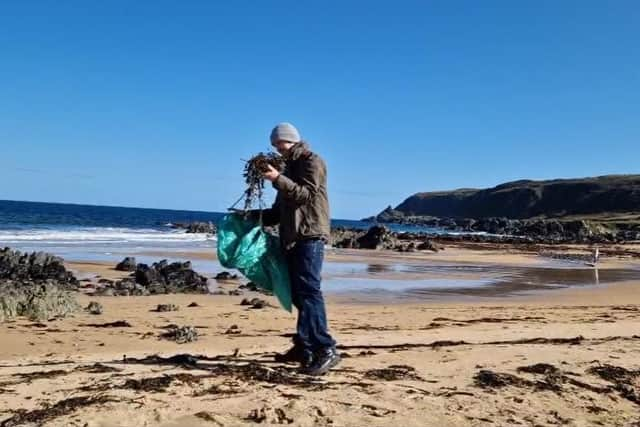
But back to the seafront. We are very fortunate here in the north west of Ireland to be surrounded by coves, beaches and inlets where seaweed washes up or becomes dislodged and lies strewn along the sands and rocks. It’s important when collecting it not to disturb seaweed that is still attached to rocks or growing along the shore, but rather collect the detached and dead pieces that are lying about. It’s also important to only take what you need and leave the rest as a lot of little beach critters depend on it for their own existence. Location is important too, we were told, to make sure you collect it from clean areas and not those were sewage is discharged nearby as this can be contaminated and cause all sorts of bother.
I just brought a doubled up bin liner to the beach with me to collect some loose seaweed and it was easy pickings. Within 10 minutes it was done. Some online gardening channels suggest washing it first but I didn’t bother doing that and instead just dotted some of it around the plants (but not directly in contact with the stems). I plan to get more as I clear the tops of the dead annuals and transplant the young seedlings out into the garden for overwintering.
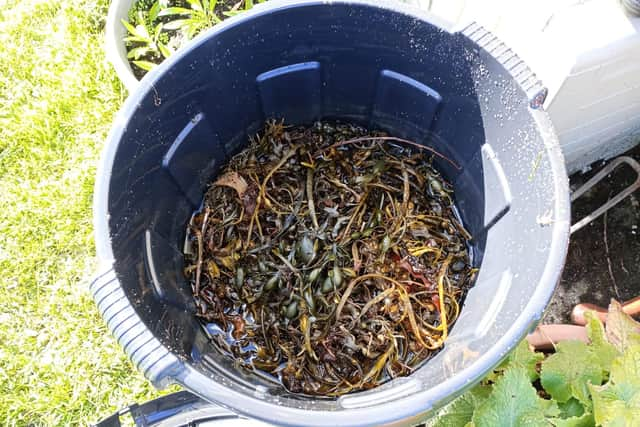
The rest of it I kept back for the super-soup fertiliser. For this you’ll need a large bucket. bin or other container with a lid or something to put over the top. I used a big, cheap outdoor bin. You fill the bin with water, add the seaweed or visa versa and give it a mix with a stick or your arm and leave it with the lid on for a few weeks to let it ferment. I’m leaving mine outside and hopefully in a matter of weeks it will break down and become a concentrated plant food / soil fixer to be diluted and spread about over the lawn and the beds in the following weeks, and I should be able to repurpose the bits of soaked seaweed that remain as mulch in the garden.
We are expecting a few decent days this week so I’m planning to get up and out early and sort the other odd jobs sorted before the cold, wet and windy conditions return. Weeding is top of the list. Grass just gets everywhere and I’ve a lot of it in the beds as well as quite a few weeds. The roots of these tend to be surface deep so it shouldn’t cause too much damage. Once they are out I’ll plant the young plants currently in pots in their place and hopefully they will grow on for another month or two if the hard frosts stays away, before going dormant over the darkest winter period. I still have a few trays of new and quite small seedlings to pot on as well and will most likely grow most of these in pots in the little greenhouses, in sheltered against the house or indoors, as they may not survive the colder weather in the ground when they are so small.
Hopefully then it will be time to sit back and put the feet up for a while before the cycle begins again early in the new year. Next week we’ll look at what you can do to use up leftover tomatoes that didn’t ripen in time, and some of the herbs and flowers before they die back.