
John Kelly RIP: A quiet determination that changed the course of history
There are people whose quiet determination changes the course of history.
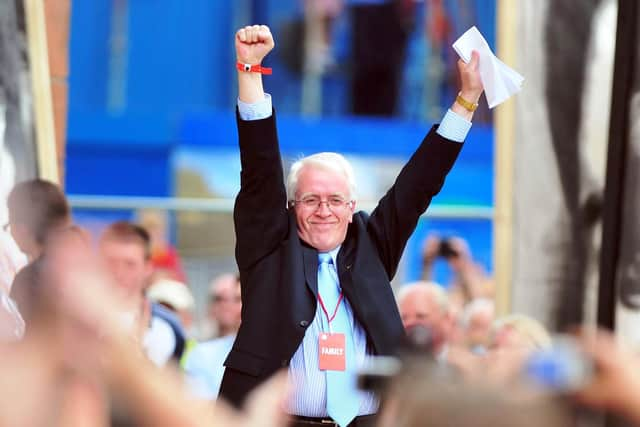
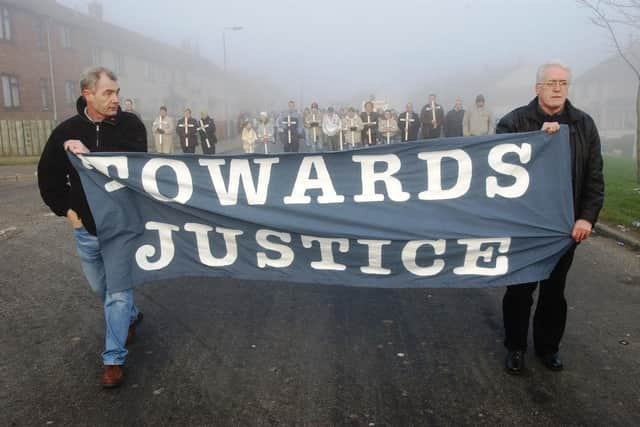
John Kelly was one of them. I have lost a friend, and Derry has lost a courageous son whose love for his brother Michael became a lifelong commitment to truth and justice.
My own contribution to the Bloody Sunday campaign owes an enormous debt to John. In 1996, he and Micky McKinney brought me to the Pat Finucane Centre in Derry to retrieve the statement I had made the day after Bloody Sunday, almost a quarter of a century earlier.
They produced a plastic supermarket bag containing several hundred eyewitness statements. Within that ordinary bag lay the testimony of a community whose truth had been disregarded.

Those statements became the core of Eyewitness Bloody Sunday, a principal catalyst for the second Bloody Sunday Inquiry and the inspiration for Paul Greengrass’s film, Bloody Sunday.
My memories of John reach far beyond the public campaign. I spent many hours in his home at campaign meetings, welcomed by his beloved Margaret with grace, great humour and unfailing hospitality. Amid the painful business of seeking justice, their home offered warmth, friendship and laughter.
Margaret’s illness and death were an immense loss to John. My wife Margaret and I treasure the memory of welcoming them both into our own home during a visit to Dublin.
Behind the campaign were people carrying grief while continuing to make room for others. John and Margaret embodied that generosity.
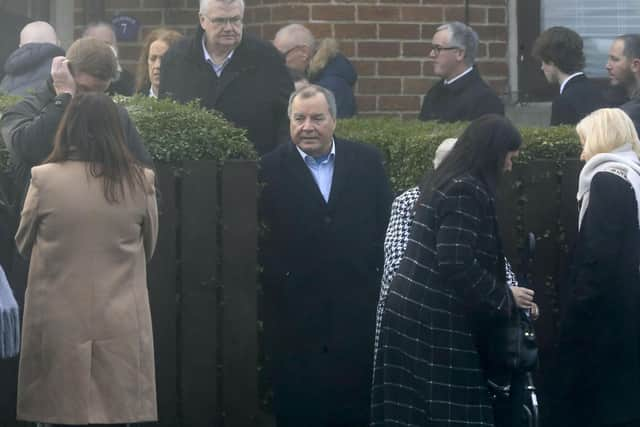
John was intelligent, resourceful and deeply strategic. He understood how to bring together people of different backgrounds and political convictions around a shared purpose. Above all, he understood that the Bloody Sunday families and wounded must retain ownership of their campaign: its voice, its objectives and its decisions.
Lawyers, journalists, authors and politicians could contribute their skills. The families and wounded would determine the direction. That principle was a foundation of the campaign’s strength, and John was one of its surest guardians.
Following the publication of Eyewitness Bloody Sunday in 1997, I received a call from Áras an Uachtaráin inviting me to present the book to President Mary Robinson and to bring the Bloody Sunday families with me.
Her earlier refusal to meet them during a visit to Derry had caused deep hurt. This was therefore a delicate encounter of reconciliation, conducted by the families and wounded with great dignity.
I also helped organise the families’ meeting with Taoiseach John Bruton and his coalition partners in 1997. Bruton deserves recognition for commissioning the Irish Government’s assessment of the new Bloody Sunday material.
The painstaking work of Irish officials Eamonn McKee and Gerry Cribben helped turn the accumulated evidence into a compelling case that the British Government could no longer readily dismiss. That assessment was presented to Tony Blair’s newly elected government before Bruton handed over to Bertie Ahern.
I had the privilege, too, of accompanying John to the White House for the St Patrick’s Day gathering in 1997. The Irish Government’s support helped bring the families’ demand for a new inquiry to an international audience. John moved through those encounters with the same clear purpose he brought to meetings at home: Michael and the other victims had been innocent, and their names must be cleared.
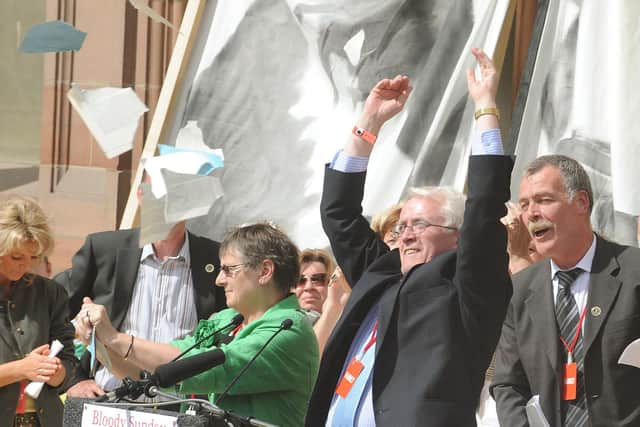
On January 29, 1998, I was with the families when Tony Blair announced in the House of Commons that a new Bloody Sunday Inquiry would be established. I took a telephone call from Taoiseach Bertie Ahern, who spoke with John Kelly, congratulating the families and wounded on that historic achievement.
It was a moment that belonged to them, and to all who had sustained the campaign through years when such a breakthrough seemed almost beyond reach.
The struggle had always concerned two profound wrongs: the murder of unarmed people on the streets of Derry on January 30, 1972, and the murder of truth by the Widgery report that followed.
For the families, Widgery inflicted a second wound. The dead could not speak in their own defence. Their relatives were left to challenge an official account that protected those responsible and cast suspicion upon their victims.
The ‘secret’ minutes of Edward Heath’s meeting with Widgery on January 31, 1972 reveal the Prime Minister reminding Widgery Britain was fighting ‘not only a military war but a propaganda war’.
Truth was to become the sacrificial lamb upon the altar of colonial cover-up.
But the British establishment had reckoned without people like John Kelly. In a man mourning his young brother, injustice awakened an extraordinary warrior spirit.
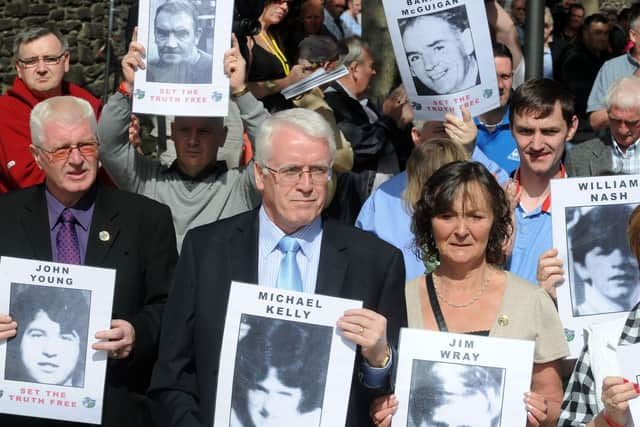
John’s weapons were persistence, intelligence, solidarity and an unshakeable determination to speak truth to power. He could not restore Michael’s life. He would devote his own to restoring Michael’s name.
There were setbacks, disappointments and years of exhausting uncertainty. John kept going. He rallied others when hope faltered. He understood that a campaign is sustained through countless meetings, difficult conversations, patient decisions and the willingness to begin again after another closed door.
One particular act of friendship will remain with me always. When Soldier F was due to give evidence before the Bloody Sunday Inquiry in London in October 2003, John telephoned and invited me to join the families.
As I walked towards Methodist Central Hall in Westminster that morning, I remember thinking that, after thirty-one years and eight months, we had finally caught up with him. We would have the opportunity to look him in the eye and hear him answer for what he had done.
What followed was an exhausting encounter with evasion. Across two days of questioning, his repeated professions of failed memory. I remember the frustration of listening as he retreated again and again behind claims that he could not remember.
Then came Michael Mansfield QC.
With painstaking precision, Mansfield confronted him with the evidence surrounding the killing of Barney McGuigan. Barney had left shelter to help the dying Paddy Doherty, holding aloft a white handkerchief to show that he was unarmed. He was shot in the back of the head.
Step by step, Mansfield narrowed the space in which Soldier F could evade responsibility. Other witnesses’ accounts were brought to bear upon his own. What had seemed an impenetrable wall began to give way.
Finally, asked whether he would acknowledge to Barney’s wife and children, sitting in the public gallery, that he had shot him, F answered: ‘Yes.’
I remember the audible gasp and the overwhelming distress of Barney’s widow, Brigid, and the hearing being interrupted.
For those present, this was far more than a dramatic moment in a public inquiry. Behind that single word lay a husband, a father, a family’s devastation and more than three decades of denial. It was an acknowledgement that should never have required such a struggle to extract – and would never have been given without the tenacity and determination of John Kelly, the other Bloody Sunday families and the wounded.
On June 10, 2010, when the Saville report was published and David Cameron described the killings as 'unjustified and unjustifiable’, I was abroad, following the momentous events at home.
I telephoned John. Amid everything happening around him, he thanked me for my contribution. Then he said: “We missed having you with us today, Don.”
Those words moved me deeply. The memory of his voice moves me to this day. On a day for which he had waited so long, John made room to remember others. That was the man.
Much was said that day about the dignity of the Bloody Sunday families. I knew something of what that dignity had cost. It had been sustained through grief, insult, delay and repeated disappointment. John’s leadership helped give it strength and direction. He was a quiet warrior who kept getting up after every knock and never asked others to go where he was unwilling to lead.
His courage endured beyond Saville. When he faced the possibility of contempt proceedings over identifying Soldier F, the soldier whom the inquiry found had killed Michael, he refused to apologise or give assurances that he would remain silent.
The prospect was an affront: a bereaved brother facing possible punishment for naming the man found responsible for his brother’s death, while that soldier remained protected by anonymity.
John would not accept that inversion of justice. He was subsequently told that he would not be prosecuted. In the end, the British establishment did not dare to challenge John Kelly’s integrity.
The campaign’s vindication helped create space for healing in Ireland. Its persistence remains a beacon for people elsewhere who confront state violence, official denial and seemingly impossible odds. I think especially of the people of Gaza, and of all those who must struggle for years to have their suffering acknowledged and their humanity respected.
John’s life offers them something precious: evidence that the truth can survive the power brought against it, and that ordinary people, acting together, can compel a state to acknowledge a terrible wrong.
For all its historic consequences, his commitment remained profoundly personal. At its heart was Michael: a young brother who went on a civil rights march and never came home.
John never abandoned him. Nor did he abandon the other families and wounded who became his companions on that long road.
To John and Margaret’s six sons – John, Michael, Emmet, Mark, Niall and Martin – to their families, to John’s sisters and brother, and to the wider Kelly family, I offer my deepest sympathy.
We remember, too, his beloved Margaret, his parents, his brother Michael, and all the loved ones whose loss he carried throughout his life.
Thank you, John, for your friendship, your generosity and your courage. Thank you for trusting me to walk part of that road with you.
You helped bring the truth home.
May you now rest in the peace you fought so courageously to secure for others.
Suaimhneas síoraí duit i dteannta Margaret agus Michael. Ní bheidh do leithéid arís ann.
Don Mullan