
OPINION: Finalising paramilitary transformation
As the 30th anniversary of the Good Friday Agreement appears over the horizon plans will be made to celebrate its value and the anniversary will be used to evaluate how far Northern Ireland has come.
While some will emphasise the benefits of peace others will question why and how the optimism and energy of 1998 has dissolved into political apathy and how brave political leadership has been replaced with defending positions that speak for tribal differences rather than building a better Northern Ireland for all.
Of course, ending conflict is a messy business and should be seen in multi-generational terms, not just in five or ten year phases. And it is precisely because of this messiness why governments, political parties and civic bodies need to carefully care for and cultivate the roots of change, seeking to re-balance any drift into social tension and antagonism that might undermine and threaten it.
The actions of the two governments and the political parties that brought about the Agreement deserve praise. It was a major achievement in bringing violent conflict to an end. But peace is not just an agreement. It requires a change in attitude and better social relations. It means moving towards a situation where differing perspectives can be exchanged in a co-operative manner rather than one perspective being used as a means to dominate or attack the other.
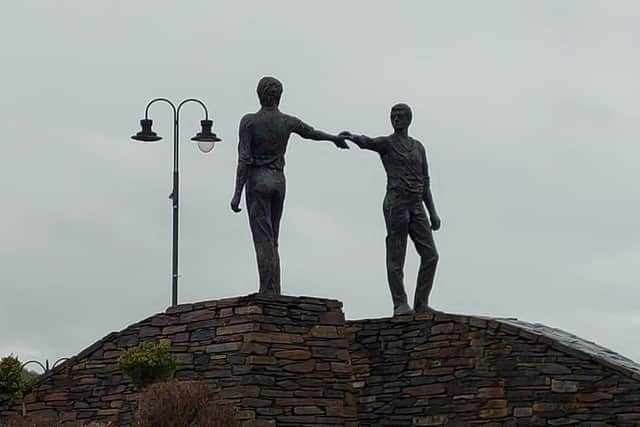

As complementary though I believe we should be towards the two governments in reaching the 1998 Agreement there were also omissions in thinking about the aftermath of that Agreement which continue to exert malign influence today. That paramilitary activity still goes on nearly 30 years after the Agreement was reached illustrates the point.
To understand why loyalist paramilitarism still exists, for example, perhaps we might consider what didn’t happen after the Agreement.
It is clear that the priority for the British government was to get militant republicanism to end its campaign of violence and commit to the political road. It is also perhaps understandable that because paramilitary loyalism was seen as a reaction to republican violence so the prevailing logic then was that if republicans committed to non-violent means to pursue their political ambitions so loyalist paramilitarism would cease almost as night follows day. This view was ill-conceived.
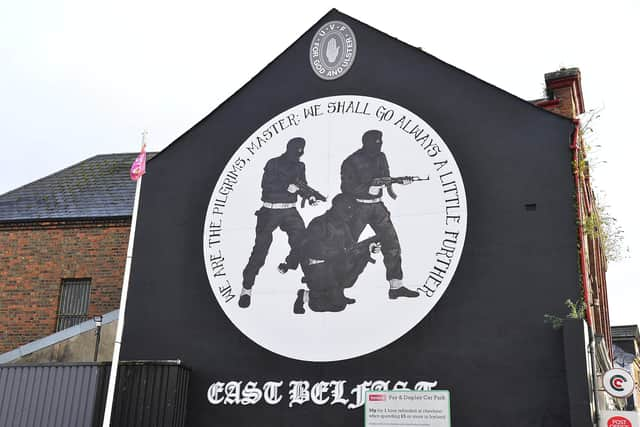
There was no formal process led by the British government to support the transformation of loyalist paramilitarism within a specific timeframe and no mechanisms or structures by which to facilitate and monitor such a process. Not surprisingly, because of this absence, loyalism in a broader sense found no clear role in the new environment of peace and lacked the infrastructure to gain a meaningful role in the new ‘post-conflict’ world.
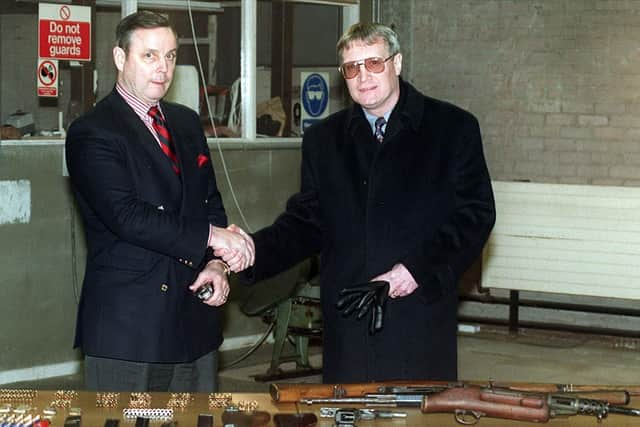
Yes responsibility for the continuation of loyalist paramilitarism ultimately lay with those involved in it but what has become increasingly evident is that without formal leverage, support and action by the British government those who benefit financially and criminally from paramilitary reputations will continue and inhibit the completion of transformation in the process. For such individuals the threat is now less about republicanism and more about the internal threat of those within loyalist communities opposed to their paramilitary influence.
A new formal process to see through the final and total transformation of paramilitary groups – dissident republicans requiring a modified approach to reflect the involvement of Dublin - is long overdue and the 30th anniversary provides a focal point for doing so. However, a few other factors need to be considered in response to that proposition.
We should not see the continuation of paramilitarism as ostensibly a policing issue as some would prefer. The police cannot arrest, charge and detain thousands of people deemed to be members of paramilitary organisations. Police can act swiftly in individual cases to remove those perpetrating crimes but this is unlikely to create the kind of widespread organisational change needed. Indeed, a heavy-handed crackdown is more likely to lead to an upsurge in paramilitary numbers rather than act as a deterrent.
Nor is the response of those political parties who believe there should be no contact or dialogue with paramilitaries of any use. This is precisely what those who benefit most from paramilitary groups want to hear; that they don’t have to face the potential difficulties and expectations of formal pressure.
Any government attempt to oversee an intense and highly formalised process with agreed targets, monitoring processes and deadlines must be supported by the political parties in Northern Ireland and, in particular, the unionist parties.
The proposal of a formal process of engagement driven by the government, with the involvement of unionist and loyalist representation with a deadline that corresponds with the 30th anniversary of the Agreement could have the necessary weight and intensity to finally deliver the completion of transformation needed.
Although monitoring processes will need to be put in place along with a commitment to fund better housing, employment and training in areas most susceptible to paramilitary influence, a package of measures should also be available to support greater cross-community engagement and develop inclusive commemorative programmes. Drawing loyalist representation further into debates about the future of Northern Ireland would also be important if perceptions of isolation that reinforce tribalism and sectarianism are to be effectively countered.
The 1998 Agreement was a moment of hope and possibility. Yes some political parties stood outside of that moment and criticised it but the articulation of any credible alternative has been glaringly absent from public debate.
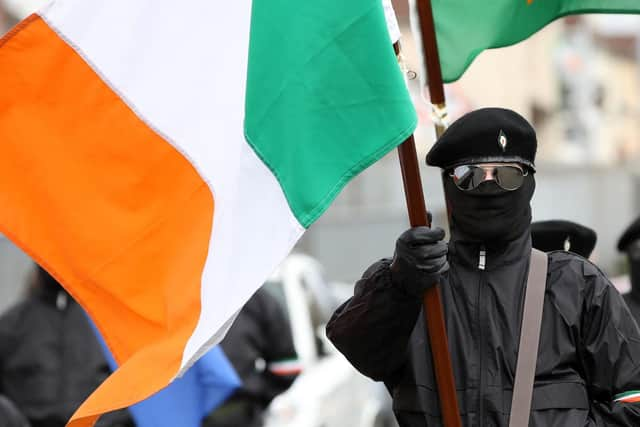
That said it is time to review the 1998 period in the light of the social problems that blight Northern Ireland today. Further new formal processes of engagement are needed to overcome the enduring problems of legacy, reconciliation and paramilitarism. And agreed principles of fairness, decency and dignity are needed to prevent further descent into division and exclusivity.
But while all of this requires co-operation it could be helped by reactivating the spirit of 1998 and using that impetus to address the outstanding issues of conflict that continue to hold Northern Ireland back and impede progress away from the embers of conflict.
*For a wider discussion of the above see the recently published Completing Loyalist Paramilitary Transformation by the Northern Ireland Development Group (nidg.co.uk)
Graham Spencer is Emeritus Professor of Social and Political Conflict at the University of Portsmouth.