
Enjoy your lie on when the Derry clocks go back on Sunday morning
Are you looking forward to your lie on on Sunday?
After you ‘fall back’ on your pillow on Saturday night daylight saving will come to an end at 2am in the morning on October 27.
Clocks will change to 1am as in Derry we move from ‘British Summer Time’ (BST) and in Donegal we revert from Irish Standard Time (IST) to Greenwich Mean Time (GMT).
BST and IST start every year on the last Sunday in March and end on the last Sunday in October.
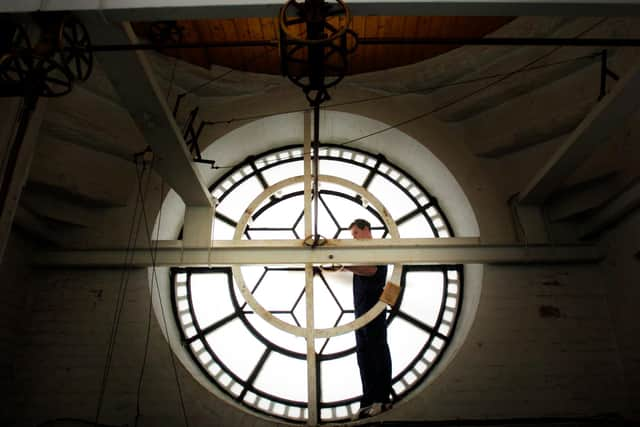

The changes have been in effect for 108 years, albeit with various alterations.
It was first introduced through the Summer Time Act when Ireland was still reeling from the executions of the leaders of the Easter Rising and war was raging in Europe.
Coldplay lead singer Chris Martin’s great-great-granda William Willett had been among the first to propose Daylight Saving in his 1907 pamphlet ‘A Waste of Daylight’. He wrote: “Everyone appreciates the long light evenings. Everyone laments their shrinkage as the days grow shorter, and nearly everyone has given utterance to a regret that the clear bright light of early mornings, during Spring and Summer months, is so seldom seen or used.”
But it was WWI that gave impetus to the idea as this newspaper noted in an editorial on Monday, May 22, 1916.
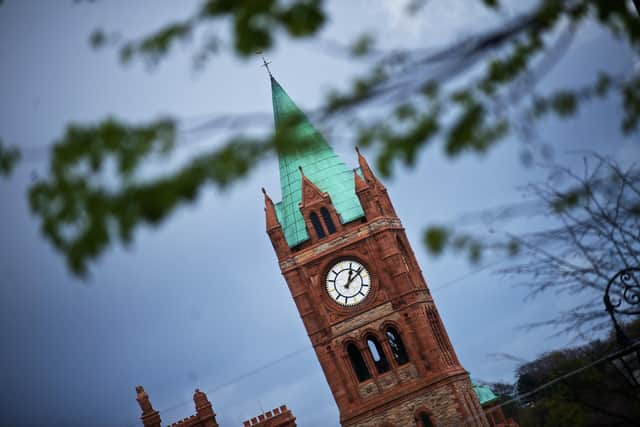
“It may safely be asserted that within the last 24 hours the ‘hands’ of clocks and watches throughout the kingdom have been subjected to more extended shifting than has ever been the case during a like interval since these ingenious modes of time-measurement first came into general use.
"By a new Act of Parliament entitled the Summer Time Act, railway, Post Office, Government Department and public office time generally was advanced early yesterday morning by one hour.
"The main object of the change is to reduce the number of hours during which artificial lighting is used for war-working purposes, and thus effect a weekly national saving in gas and electric lighting, estimated at £175,000.
"The ‘new time’ conditions which will operate till October next, will, of course, have various other incidental effects, particularly that of making people rise an hour earlier than usual in the mornings,” wrote the editor.
The paper predicted a period of adjustment with mishaps in attempting to catch trains and a ‘goodly percentage’ of letters and parcels being left behind possible.
The editorial took a philosophical turn noting how a traveller had reported his greatest pleasure during ten years in Samoa had been that ‘during all that time he never bad to consult clock or watch’.
Time was measured by ‘hot hours and cool hours and the recurring calls of hunger’ and this led to a ‘sweet and simple’ life.
"That seems to suggest that in a clock-ridden community good-temper has something special to contend with,” the ‘Journal continued, acknowledging we were doomed to modern time-measurement.
The paper noted elsewhere how in that inaugural year the ‘longest day of the year’ and the ‘shortest day of the year’ fell a month apart.
"Though only a month separates us from ‘the longest day’ the present year will have this peculiarity, that May 21st was artificially made the ‘shortest day’ in these countries owing to the operation of the Summer Time Act,” we reported.
Enjoy your lie on.