
Front shore, Lady's Bay, in Buncrana, one of two beaches in 26 counties deemed 'Poor' due to ‘untreated wastewater’
Lady’s Bay, the front shore in Buncrana, is one of only two beaches in the 26 counties that have been deemed 'Poor' due to ‘untreated wastewater’ discharges during periods of heavy rain.
The number of beaches classified as ‘Poor’ by the Environmental Protection Agency (EPA) decreased from five to two in 2024.
These were Lady’s Bay and Sandymount beach in Dublin, which were also poor in 2023.
"The main source of pollution affecting the bathing water is untreated wastewater released occasionally from the town's collecting system,” according to the EPAs Bathing water quality in Ireland report for 2024.
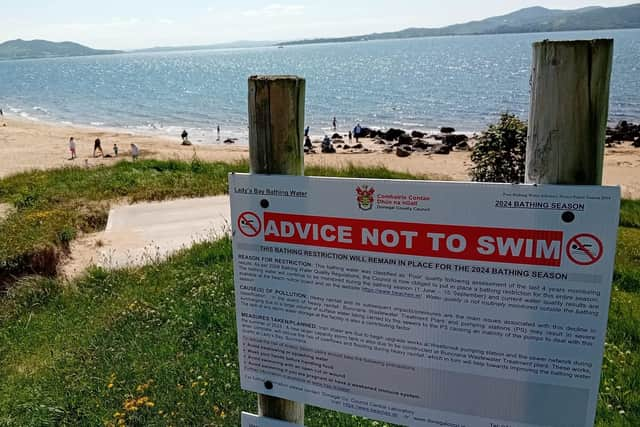

Poor water quality on the popular beach has resulted in ‘no do not swim’ advisories being issued over the past number of summers.
“Uisce Eireann is progressing a major upgrade of the collecting system to improve its performance and provide more storage for waste water collected during heavy rainfall,” the EPA report states.
Twenty-one beaches in Donegal were monitored by the EPA last year with 81 per cent deemed to be of excellent water quality.
Culdaff, Stroove, Portsalon, Ballyhiernan, Downings and Bundoran were among the popular bathing spots given the highest rating.
Three of Donegal’s beaches (14 per cent) had ‘Good’ water quality. These were Lisfannon, Rathmullan and Portnablagh.
Across the 26 counties 81 per cent of bathing sites had 'Excellent’ water quality in 2024, while 96 per cent meet or exceed the minimum standard of ’Sufficient’.
In 2024, urban wastewater related incidents were the most frequently reported cause of beach closures. Run-off from agriculture, fouling from dogs and wastewater from properties going to surface water drains rather than sewer (known as misconnections) also impacted on bathing waters.
Heavy rainfall and associated wastewater overflows, and runoff from agricultural lands and urban areas, can cause short-term deterioration in water quality.
Localised intense rainfall, particularly in the West and North-West led to bathing water restrictions (including beach closures) to protect bather health. Overall, however, there were less restrictions in 2024 than in 2023.
Commenting on the report, Dr Eimear Cotter, Director of the EPA’s Office of Evidence and Assessment, said: “We are happy to bring a positive news story on our bathing water quality for 2024, which is overall very good. Indeed, we have the highest number of “Excellent” classifications for bathing waters since 2014.
"However, heavy rainfall during another bathing season has emphasised the need to build climate resilience into the management of bathing waters.
"Heavy rainfall in the west and north-west last August especially resulted in many beaches being closed to protect swimmers’ health. Local authorities must step up their efforts to improve their understanding of causes of pollution from heavy rainfall and how this impacts beaches.
"This is also important outside the official bathing water season as more and more people are enjoying outdoor swimming all year round.”
The EPA noted that a management plan is in place to identify pollution sources at Lady’s Bay and put measures in place to improve water quality.
This approach has been successful in the cases of three beaches that were ‘Poor’ in 2023 and have since improved: Balbriggan (Front Strand), Trá na mBan (An Spidéal) and Loughshinny.