
Huge scale and long duration of Mobuoy dump clean-up laid out by DAERA
The huge scale and long duration of the Mobuoy clean-up was outlined this week with officials indicating engineering work could take up to seven years once a remediation strategy is approved.
The massive dump site may not be fully remediated for much longer with monitoring and maintenance of remediation techniques likely to continue for two decades at least.
Officials, however, say the rehabilitation of the illegal dump is not expected to cost the upper limit projection of £700m previously quoted as this would entail all of the waste buried in the Faughanside site being dug out of the earth.
The Department of Agriculture, Environment and Rural Affairs (DAERA) are currently consulting on a draft remediation strategy for Mobuoy.

The draft strategy incorporates a range of techniques for the neutralisation of waste in the dump.
These range from the physical removal of material, the pumping and processing of contaminated groundwater and phytoremediation using short rotation crops such as willow and miscanthus.
"It is really important to note that that figure of £700m was a cost estimate linked to the full removal of waste,” a senior DAERA official told a press briefing this week.
"In our extensive assessments across the site that £700m which equates to the full removal of waste is not actually the best environmental option,” they added.
During the summer a Northern Ireland Audit Office report on waste crime noted that the final clean-up costs had been projected at between £17m and £700m, with the most reliable estimate suggesting a cost of £107m.
But officials said the £107m figure was not set in stone.
“There are other estimates out there that are linked to the draft strategy but those are a point-in-time estimate and it is really, really important that at this point in time there is no agreed strategy for the site and there won't be until post-consultation,” an official declared.
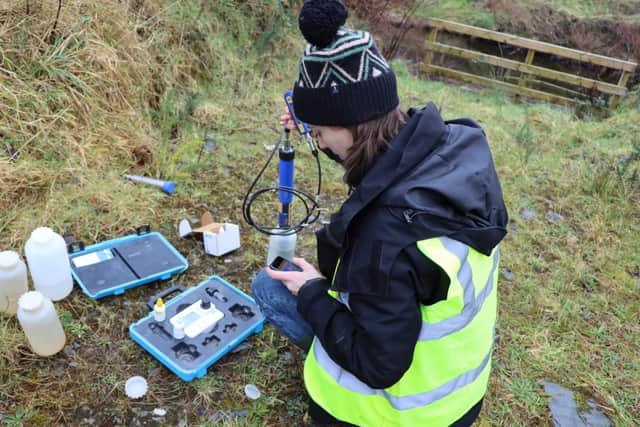
The briefing was told the total cost already incurred in progressing the remediation of the site was estimated at approximately £8m.
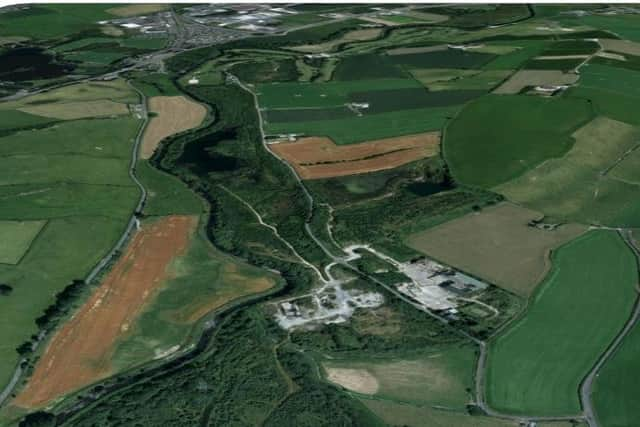
Under the current remediation proposals the 46 hectare site has been broken down into nine zones.
"Those zones were split up in terms of the types of waste that were found in those zones and the contaminants that were coming from those waste bodies,” the briefing was told.
DAERA looked at each of the zones as mini sites and proposed varied remediation solutions for each of them.
Options were assessed on environmental, social and economic criteria to, DAERA said, arrive at the most sustainable methods of waste neutralisation.
Some of the waste will have to be dug up and physically removed including historic deposits of tarry waste that pre-date the illegal dumping that saw two men jailed this summer.
Tarry waste – a by-product in chemical production – has been located in two of the zones and some of that will be excavated.
The route of the proposed new A6 also skirts part of the eastern section of the site and waste removal is also proposed for that section.
However, other solutions include the use of plants such as willow, miscanthus and reeds.
For example, short rotation coppice willow will be planted on the site and used as bio-filter to ‘manage the contaminants in water while producing a biomass crop’.
“Across the zones we have 'biological active cap' which is about preventing rainwater soaking through and then becoming contaminated and adding to the leachate,” an official explained. The biological active cap will also help stop gas release.
This will take a number of years.
"Once the willow have become established further testing would take place to determine the suitability of willow and if any additional treatments would be required to allow willow to be used,” the official added.
Another solution is the use of permeable reactive barriers.
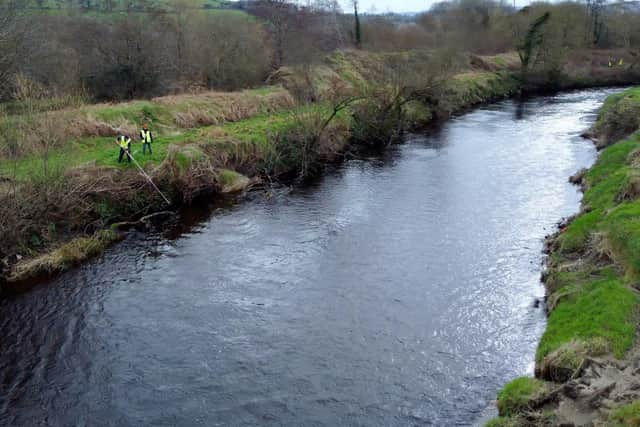
These are large scale sunken walls of reactive material located in trenches which are designed to filter contaminated groundwater before it reaches the River Faughan.
One of proposed PRBs will be located on the Campsie Sand and Gravel site where there is potential contamination from dissolved heavy metals in groundwater and surface water.
"One of the remediation options proposed in the strategy is a permeable reactive barrier. It's an underground treatment system and it's a type of barrier - its a groundwater treatment system below the surface and it's really designed to intercept the flow of what is contaminated groundwater towards the river and to treat it before it reaches the river,” the briefing was told.
PRBs are considered as low impact passive systems for the promotion of contaminant degradation, the draft strategy advises.
Other methods of remediation include the pumping and processing of contaminated ground water on site, water balance management and hydraulic containment.
DAERA officials told press that the most expensive method of remediation would be the excavation of all of the waste at Mobuoy. This has been provisionally estimated at £700m. However, this was not considered the best solution.
"The most environmentally, socially and economically sustainable solution was not to dig all the material out and in fact the combination of solutions that is proposed in the consultation is the most sustainable solution in terms of the environment, in terms of social aspects and in economics. That is the absolute essence of what we are consulting on,” an official said.
The draft strategy remains at concept stage and once the consultation period ends in October considerable work will be required until a final design is arrived at.
When a remediation plan is eventually backed by the Executive engineering works may take the best part of a decade with monitoring to continue ‘until it shows the risk has gone’.
"Potentially five to seven years of actual engineering works on the site and then potentially another 20 plus years after that for the site to be completely mediated and back towards a natural state,” an official advised.