
Salmon stocks have not improved since drift-netting was banned in Donegal, committee told
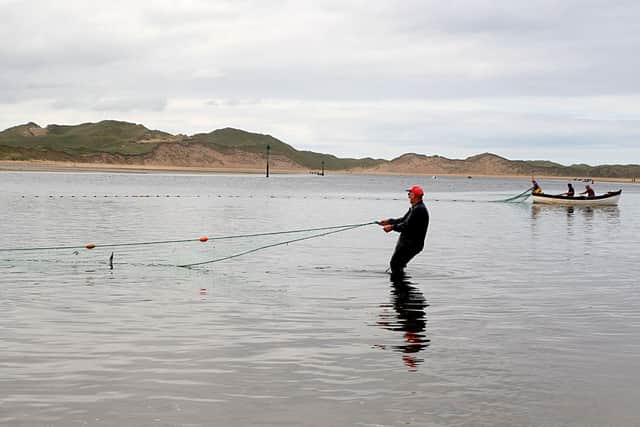
Salmon stocks have not improved since drift-netting was banned in Donegal nearly twenty years ago, it’s been claimed.
Prior to the closure of the fishery seals would take more salmon than small drift netters in Donegal, members of the Joint Committee on Fisheries and Maritime Affairs were told during a briefing by the Irish Islands Marine Resource Organisation (IIMRO).
Séamus Bonner, an Arranmore-based fisherman who is IIMRO secretary, said: “It will be 20 years next year since the drift net fishery was closed and the stocks do not seem to have improved.
"It is obvious that the underlying issues have not been addressed. Water quality, barriers in rivers, salmon farms in river estuaries and pelagic bycatch are problems that have not been addressed.”

Enda Conneely, IIMRO vice-chair, said the drift netting ban had had a ‘huge impact’ in Donegal.
"I fished salmon years ago but, then, the management of the fishery at the time was not great.
"Monofilament net was illegal to fish with but it was legal to have it everywhere else. If we are going to have a law, we should have ways to fish.
"There were 19 of us in a small operation at the time, and salmon would take us away from lobster fishing for those six weeks. The seals would get just as much fish as was being taken by the smaller boats,” he said.
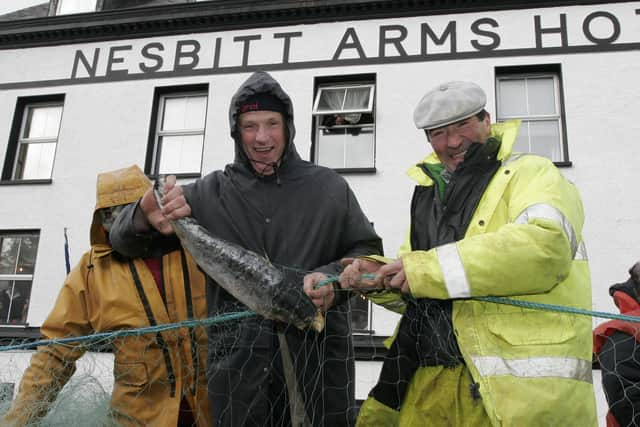
Donegal TD Pat ‘The Cope’ Gallagher raised the 2007 drift netting ban.
"At the time, I laid a lot of the blame on Iceland. Iceland said it would make a major contribution financially towards the losses but we have never heard from it.
"The major contribution was not even a single euro. I would like to hear the views of the witnesses on this because there is no one better than them to establish what stocks of salmon are there at present,” he said.
Deputy Gallagher suggested the possibility of reintroducing small total allowable catches (TACs) and quotas of salmon for evidence gathering.
“I do not know what the scientific advice is, and I may table a question to establish it from Inland Fisheries Ireland,” he said.
Mr. Conneely replied: “With regard to salmon and Iceland's contribution, we should have thought of this when Iceland was looking for access to European waters.
"Last year, we were the only producer organisation that strenuously objected to it because we have enough fishing effort in there without bringing in third countries that have not even joined the EU.
"We need to look at salmon because according to the latest information we have, it has not improved the stock . We can check it out to see whether there are any ways of doing it.”
Jerry Early, IIMRO chair, said: “As far back as 17 or 18 years ago, shortly after the ban came in, we suggested at the time that we accept the science that is coming in from all quarters but the one science that was not used was that of the fishermen.
"It is vitally important that we look at a way of a small science quota to be made available because we can ascertain what is not going up the rivers. This scientific evidence is not coming from the sea.”