
Plans to restore Derry's historic Boomhall greenlit
Outline plans to restore Boomhall House and give the historic Derry dwelling a new lease of life have been greenlit by Derry City & Strabane DIstrict Council.
Members of November’s Planning Committee unanimously approved an outline planning application, put forward by the Boomhall Trust, which will restore the historic building back into use with a day nursery, a café, cultural and community floorspace, and residential institutional accommodation.
Works also include access improvements on Culmore Road and provision of passing bays on the private site road, 104 car parking spaces, site lighting, restoration of the historic landscape and all associated site works.
A Planning Officer said the day nursery will occupy the lower ground floor, with direct access to an enclosed nursery play area in the surrounding grounds, and have capacity for approximately 50 children.

The Ground Floor will house a conference, meeting and event space, a reinstated library / reading room, a café and ancillary office space, while First Floor and Attic will contain serviced guest accommodation, comprising 13 bedrooms.
The site is located on the western bank of the River Foyle, just east of the Culmore Road and north of Madam’s Bank Road, and the Foyle Bridge runs over the grounds just to the south.
It is approximately 5.9 hectares and includes the Boomhall House and wider historic lands, including a private access road which is shared with the Foyle Hospice.
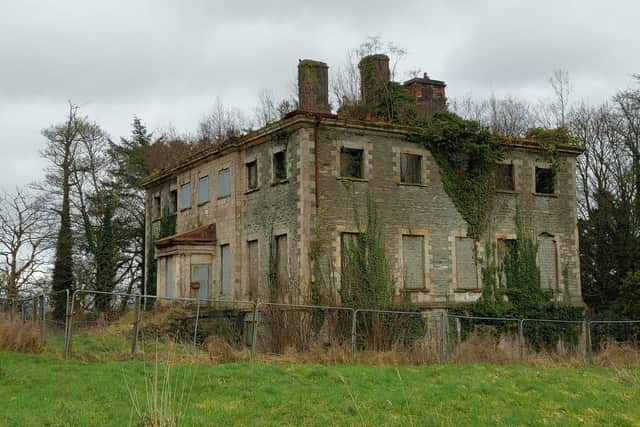
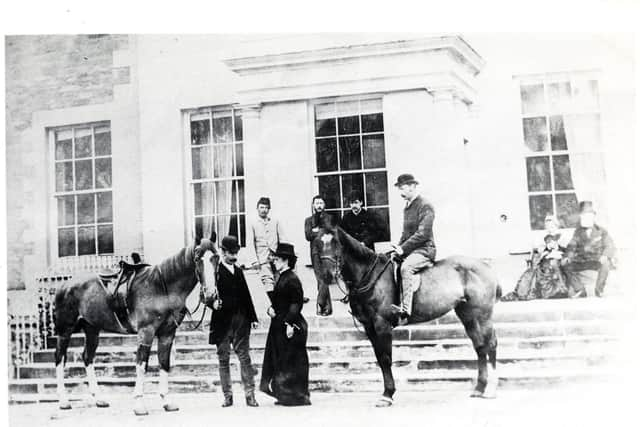
“The house was built in the 1770s but has remained vacant for over 50 years and has deteriorated over the years,” The Officer added. “The house itself is not listed but Officers consider it a non-designated heritage asset of local significance.”
They noted that while the roof and internal floors were ‘gone’ due to deterioration, Boomhall House’s external and internal walls were still ‘generally intact’.
The Officer added: “The building will be restored within its existing footprint to its original height and scale and it will keep the existing door and window openings, with a new roof and rebuilt chimneys proposed.”
An agent for the Trust said it was ‘committed to remaining the custodian for Boomhall long after this project is delivered’.
“They want to reinstate its original character using appropriate materials and techniques, to sensitively restore its historic gardens and landscape, and enhance the ecological value of the wider estate," the agent added.
“The building will be given a new lease of life as a community hub, open to everyone to enjoy, but there will also be valuable employment, training and educational opportunities created by this project.”
“There will be opportunities for local tradespeople, young people, particularly those interested in traditional building and conservation skills.”
The Boomhall area is one of Derry’s most important sites and played a vital role in shaping the history of the city and arguably the island of Ireland.
Excavations were carried out in March, 2013, revealing evidence of the battles during the Siege of Derry when the famous wooden boom was laid across the River Foyle.
The boom was fixed from the western end from a fort erected at this ancient townland of Ballynashallog and linked to another fort across the River Foyle at Gransha.
The Boomhall stately home was erected later, in the 1770s and was all but destroyed in a fire after the last occupants left over 40 years ago. The nearby stables pre-date the stately home. The area is also home to some of Derry’s oldest oak trees, the emblem of the city.
The site’s history stretches back further to the time of the ancient monastery in the city centre. Before the Plantation of Ulster, the land was owned by the Abbey of Derry and monastic authorities utilised it to cover the costs of their community in the area.