
Spring at Inch Island – A journey into a wonderland
It was the second week in May.
I had just returned from a month-long holiday in the south of Spain. I spent the first few days getting the garden into a reasonable state.
The grass cut from the lawn was about three times the normal volume. I had planted a few spuds before we left and most of the plants had emerged from the eight drills I had set.
The ideal time for planting the other vegetables had passed but I had made a start on clearing the weeds in preparation for harvesting a reduced crop later in the summer.

I then took a trip to my favourite place, Inch Island, which is only 15 minutes drive from where I live. I had missed the gradual development of the Spring with all its changes.
It is difficult to avoid too many superlatives but Inch in the full bloom of spring was just magnificent. Perhaps it was the contrast with Andalucia where the dominant colour is a non-descript yellowy brown but Ireland truly is a wonder in green.
It was a delight to see the cattle and sheep in the fields. They are conspicuously absent from Andalucia.
My thoughts about this were not without misgivings. I spotted a tractor spreading nitrogen fertilizer which gives the fields its extra green glow.
This boosts grass growth for silage production but contributes to eutrophication of water courses. Algae growth stimulated by the excess of nitrogen, (along with other factors), can lead to oxygen starvation and the death of much of the life in our water courses. The best example of which is the destruction of Lough Neagh.
Even the garden of Eden had its problems. Inch is no different from any other environment on earth.
I had little time to dwell on these negatives as I looked at the hawthorn hedges. The vivid green of the leaves contrasted with the full bloom of the white flowers, the May blossom.
Fertilized by the bees and other insects, the blossom would soon drop off and be replaced in late summer by the bunches of hawthorn berries.
In autumn they would provide vital food for the many birds which had built their nests in the same hawthorn trees making use of the leaves to camouflage their nests and the thorns to ward off any predators.
Whole libraries have been filled with the various processes associated with a single hawthorn bush: photosynthesis, insect fertilization, seed production, seed dispersal, camouflage, food chains etc.
My brain had no space to spend time on the science as my senses were blasted with the sheer beauty of an Irish hedgerow.
I drove down to the beach. The sea was flat calm and would have been perfect for a swim but I had been swimming in Spain and would leave the numbing temperatures of Lough Swilly to later in the summer.
I saw two tiny birds flying across the beach. I used my binoculars to watch them scuttling over the sand. They were ringed plovers, our smallest wading birds. They would soon make a scrape along the shoreline to form a simple nest camouflaged by the surrounding sand and shingle. In the autumn with luck there will be a small flock of the original pair and their offspring to enjoy.
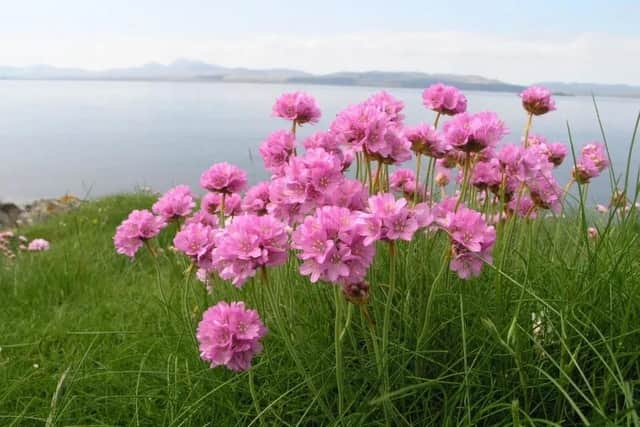
Before we left the beach, I noticed a magnificent display of one of the few flowers that can thrive in the conditions of salt and wind by the sea.
They were thrift or sea pink which had formed a scattered garden along the sea wall. On the drive back the flowers in the hedgerow caught my attention. The untidy, delicate cow parsley waved at me in the breeze.
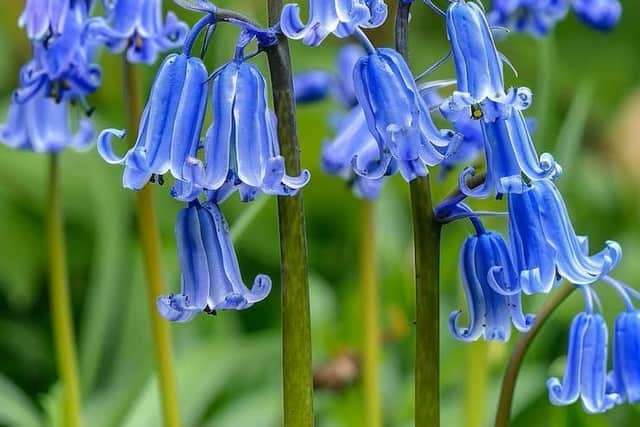
The sturdier alexanders with its yellower leaves and already emerging seed heads filled other parts of the hedgerow. It was the bluebells that stole the show. Unlike the cow parsley and alexanders their reproduction does not entirely depend on seed dispersal, they produce bulbs which lie dormant to produce next year’s crop.
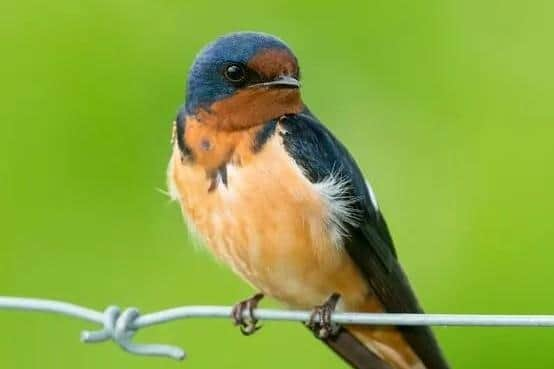
Only for my own entertainment, I keep lists of birds I see. My list after a month in urban Spain was no more than a dozen. I would have had no problem doubling that figure on my short visit to Inch. I had seen a few swallows in Spain but on Inch they were far more numerous. I try to make a mental note of the first swallow I see in Spring.
It is usually April 17. I had missed that personal milestone. The swallows had completed a hazardous 6,000 mile migration from South Africa.
Another of nature’s everyday miracles I had been fortunate to see on my excursion. On the wall around Inch lake two mallard ducks had landed. It is Ireland’s commonest duck but this does not stop it being a treat for the eyes.
The drake with its green head, grey back with blue flashes on its wings is very handsome. By contrast the female is a dowdy mottled brown.
The drake’s plumage is designed to attract the female. The female must sit on the eggs hidden in the reeds. Too bright a plumage would attract predators. Hence the contrasting colours between the sexes.
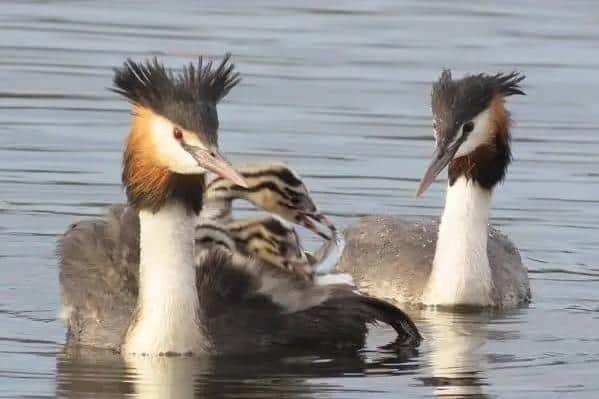
Far less common than the mallard, the great crested grebe visits the lake to breed in the summertime. I spotted pair of them on the lake.
Unlike the mallard which dabbles in the shallow water the lake, the grebe dives down to catch the small creatures, worms, larvae and small fish that make up its diet.
They are noted for their complicated courtship display. It is broken into different parts including a courtly dance, synchronised diving and the offering of weed collected from the bottom. The weeds are presented like a bunch of flowers in the finale of the courtship display.
The grebes build a nest of floating reeds quite often in clear view. Their chicks can sometimes be seen piggy backing on their parents as they glide across the lake.
There was nothing exceptional or rare on my trip to Inch. Everything was commonplace but delightful at the same time. Unfortunately these everyday wonders are under threat from our abuse of the environment.
On a worldwide scale we are all in danger from global warming. At a more local level, without due caution Inch Lake could become another Lough Neagh.
Inch Island is by no means unique. No doubt readers will have their own favourite places to visit either in town or the countryside. Spring will soon fade into Summer. Don’t miss the glories of the Irish Spring!