
Ahead of the game – Don Mullan pays homage to Jean Rodgers one of the finest footballer to ever grace Creggan
Long before women’s football had a recognised place in Ireland, Jean Rodgers was one of the finest footballers on the greens of Creggan. Don Mullan remembers a Derry girl who never asked whether the game belonged to boys.
More than half a century ago, on the greens of Creggan, a football arrived at Jean Doherty’s feet.
She did not ask whether the game belonged to boys. She took the ball and played.
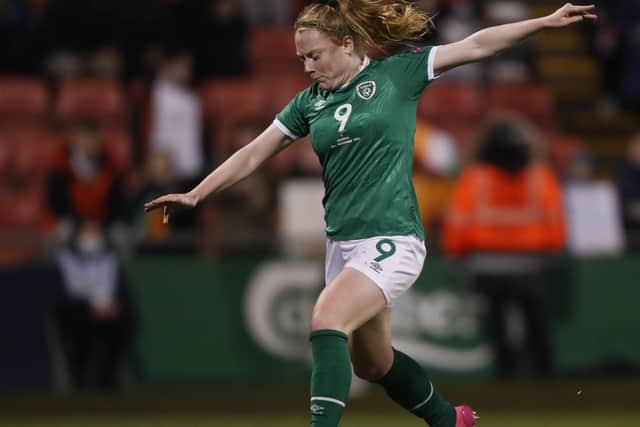
This October, the women’s football teams of both the Republic of Ireland and Northern Ireland will begin the play-offs that could carry them to the 2027 FIFA Women’s World Cup in Brazil.

The Republic will face Kazakhstan over two legs. Northern Ireland have the more formidable challenge of Portugal. Should they prevail, both will face a further play-off before Brazil is finally within reach.
For those of us who grew up when football was regarded almost exclusively as a boys’ and men’s game, there is something extraordinary about that. And it makes me think of Jean.
Jean was one of the best footballers I knew as a boy growing up in Derry in the mid-1960s. Not one of the best girl footballers. One of the best footballers.
Our matches were not played in stadiums or on manicured pitches. They were street derbies, fiercely contested on the greens along Greenwalk, which ran through our neighbourhood between Beechwood Avenue and Fanad Drive.
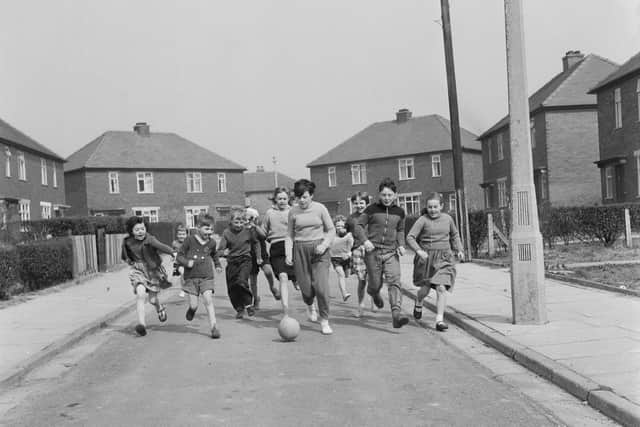
Teams came from Melmore, Leenan, Malin and Dunmore Gardens, each carrying the pride of its own street.
These were not casual encounters. A match had to be proposed and agreed in advance. A delegation would be sent from one street to another – down to Dunmore or up to Leenan – to negotiate a contest.
It was childhood diplomacy of the highest order, almost like arranging a treaty between rival states. Terms were agreed, honour was pledged and, for a moment, peaceful relations prevailed. Then the match began.
Of all those contests, it is the rivalry between Leenan and Dunmore Gardens that remains most vivid in my memory. I played for Leenan. Jean played for Dunmore.
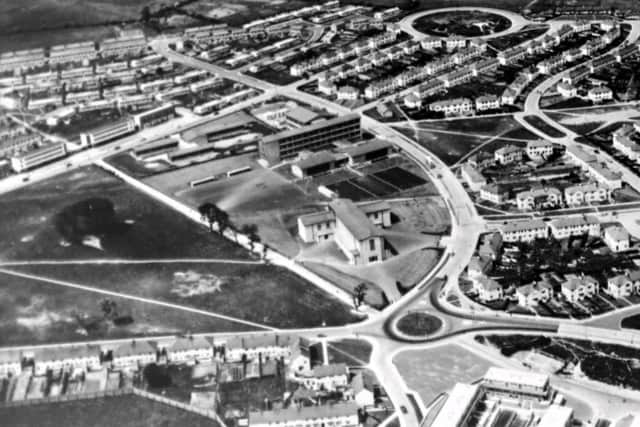
There were no marked touchlines, no referees, no television cameras, no sponsors and no academies. We played in our scuffed shoes, with whatever ball was available. Two teams and fierce street pride.
Looking back across almost sixty years, three players from the Dunmore Gardens team remain especially vivid in my memory: Michael Kelly, Terry Mullan and Jean Doherty.
Michael kept goal for Dunmore, just as I did for Leenan. “Michael Kelly was a gentle soul,” Jean remembers.
Jean would have been ten or eleven. She was fast, fearless and tough as nails. She could dribble, and if you gave her even an inch of space, she could unleash a cannon of a shot. She was one of Dunmore Gardens’ leading goalscorers and as good as – and frequently better than – the boys around her. You underestimated her at your peril.
I do not remember any of us making a great issue of the fact that Jean was a girl. Once the match began, it became irrelevant. What mattered was whether you could play. Jean could play.
But for an ten or eleven-year-old girl with Jean’s ability, there was scarcely anywhere for that talent to go. Two fledgling teams recognised what she possessed: Paddy Hutton’s Creggan Girls Club and Johnny Jennings’s Shantallow Ladies Football Club.
Johnny had seen Jean playing in a women’s seven-a-side tournament at the Stardust and invited her to join his team. Paddy Hutton also recognised her extraordinary ability.
“You are the best centre-forward I’ve ever seen,” he told her. “But you are ahead of your time.” He was right. There was no established league, no academy, no scout watching from the touchline and no pathway through which Jean’s ability might be recognised and developed.
There is something quietly tragic about that. Around us, the Troubles were beginning to combust. The streets and greens that had been our playgrounds were entering a darker time. Childhood possibilities were narrowing for everyone, but for a gifted young female footballer like Jean, they had scarcely existed in the first place.
There was a word commonly used in those days for girls like her: tomboy. It belonged to an age when adults seemed to require an explanation for a girl who climbed trees, fought her corner or wanted to kick a football with the boys.
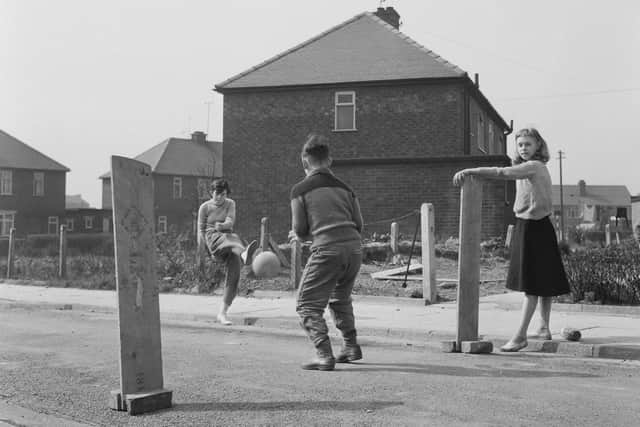
There were things boys were supposed to do and other things girls were expected to do. Jean seemed blissfully uninterested in those distinctions.
Today, we might be tempted to call her a pioneer. But that would suggest she knew she was pioneering something. She did not. Jean simply wanted to play. So she played. She was not trying to be one of the boys. She was simply being Jean.
This was before women’s football began to organise itself properly on this island. The Northern Ireland Ladies Football Association was formed in late 1972, followed by the Ladies Football Association of Ireland in 1973. That May, Ireland defeated Wales, 3–2, in its first official women’s international.
On June 30th, the Republic and Northern Ireland met in Dublin for the first time, with the Republic winning 4–1. Those women became pioneers in the recorded history of the game. Jean belonged to the history that was never recorded.
In our neighbourhood, she was exceptional. I cannot remember another girl joining our street derbies. Jean stood alone.
In Derry, where footballing allegiances have always looked both north and south, the progress of both Irish teams carries a particular resonance. Northern Ireland reached the European Championship in 2022, their first major tournament.
A year later, the Republic reached the Women’s World Cup for the first time.
On August 20, 2023, I sat down to watch Spain play England in the World Cup final in Sydney. Before the match began, something made me think of Jean. I took out my phone and wrote to her.
I reminded her of those Greenwalk derbies and told her that, of Michael Kelly, Terry Mullan and all the players I remembered, she had been one of the finest. I described her as I remembered her: fast, fearless and tough as nails.
Then I wrote something that had never fully occurred to me until that moment: “You are one of the unacknowledged seeds who brought us to this day.” I meant it.
There on the television screen was a packed stadium in Sydney. Millions more were watching around the world. Women were competing at the highest level of its most popular sport, and young girls everywhere were wearing the shirts of their football heroes.
My thoughts travelled back to Greenwalk and to a girl who refused to accept that football was not for her. I told Jean that I hoped her children and grandchildren were proud of her. I was.
Three years later, as two Irish women’s teams prepare for another attempt to reach the World Cup, that memory has returned. Think of the distance travelled: from girls being regarded as curiosities for joining football games to tens of thousands of supporters buying tickets to watch women represent their country; from almost no pathway at all to World Cup qualification.
There is still a considerable distance to travel in women’s sport: in facilities, investment, opportunity and recognition – but something fundamental has changed.
A girl with a football no longer needs to explain herself. That change was achieved by famous pioneers: by international players, coaches, administrators and campaigners who fought for recognition when recognition was difficult to obtain.
But it was also advanced quietly by girls who simply played. Girls who turned up. Girls who demanded the ball. Girls who sometimes sent the boys home wondering how they had been beaten.
Jean was one of those girls. Jean Rodgers, as she is now, remains one of those unmistakable Derry characters: funny, forthright and entirely without airs; capable of being gloriously blunt, and extraordinarily generous when generosity is required.
History is not always made by people who know they are making it. Sometimes it begins in scuffed shoes, on an unmarked green, in a match negotiated by a delegation of children who carried the honour of their streets as solemnly as any country carries its flag.
Somewhere on Greenwalk almost sixty years ago, a football arrived at Jean Doherty’s feet. She did not ask whether the game belonged to boys. She took the ball and played.
Jean was, indeed, one of the best centre forwards I ever faced as a child. And I can still remember trying to stop her.