
Archbishop Martin: AI should not be feared but its power must remain within human responsibility
Archbishop Eamon Martin has said Artificial Intelligence (AI) should not be ‘feared or rejected’ but that it must be ensured that its power remains within ‘human responsibility, conscience, relationship and the common good’.
The Derry-born leader of the Catholic Church in Ireland said the church doesn't have the technical answers to AI, but that it can offer ethical principles.
“It is worth considering that the more powerful our rule-governed machines become, the more urgently we need wise human beings to oversee them, human beings who are formed in prudence and virtue. It is not that we should fear technology, or reject it. Instead we must ensure that technological power remains embedded within human responsibility, conscience, relationship and the common good,” said Archbishop Martin.
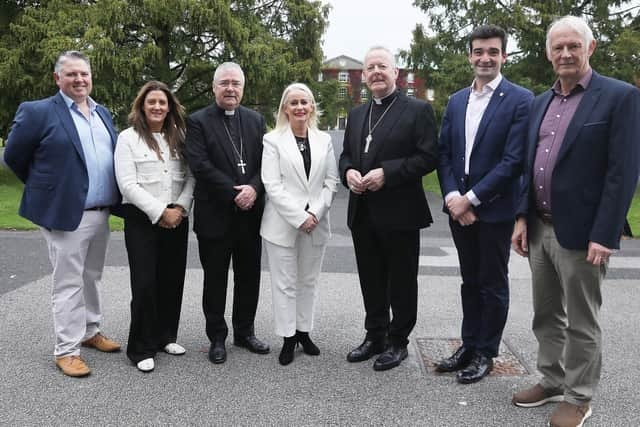
He was speaking at a recent conference in Maynooth to discuss Magnifica Humanitas: On the Protection of the Human Person in the Age of Artificial Intelligence Pope Leo’s first encyclical letter, which was published earlier this year and focuses on AI.

In it the Pope warns truth, work and freedom are all vulnerable to the effects of untrammelled AI.
At Maynooth Archbishop Martin said: “The danger is not simply that machines may become increasingly powerful. It is that human beings may gradually surrender to AI the very capacities that make genuinely human judgement possible.
"The questions before us today are immense, not only about who is building, controlling or benefiting from artificial intelligence, but also who is convening the human conversation around it, whose voices are being heard, and what understanding of the human person is guiding us?”