
Derry Origins Tour traces Halloween back to its ancient roots
Derry is the undisputed home of Halloween, but the roots of Europe’s biggest Samhain celebration extend much further back than the pumpkin-carving and apple-bobbing customs of today.
One local tour guide is using his scientific expertise to trace the ancient practices of our Bronze and Iron Age, which shaped the Halloween traditions we know.
Martin Bradley of Foyle Trails runs the Halloween Origins Tours out of Derry, inviting small groups on a journey through time, with unique immersive experiences that weave ecology, archaeology, mythology, and storytelling.
It’s also an opportunity to discover the beauty of the Sperrin Uplands and wander the wilds of East Donegal, to find out more about how our ancestors communed with nature and offered tribute to the spirits who they believed brought bounteous harvests and provided shelter during harrowing Irish winters. Sometimes providing the spirits with offerings in the most brutal and terrifying ways.

Martin spent many years working for the former Strabane District Council on environmental and biodiversity issues.
He gained his initial inspiration from a Council colleague who was working to promote Strabane’s Halloween celebrations.
“I’ve always had an interest in nature and landscapes as a scientist, but Halloween got me interested in the mythology of places and how place, ecology, and mythology all inter-connect,” he explains. “I’m also fascinated by place names and how they help explain the ancient archaeology and landscapes of Ireland`s North West.
“The hinterlands of Derry and Strabane provide opportunities to discover how our Bronze Age and Celtic Era ancestors revered several native tree and plant species that were woven in ritual practices and mythology. J K Rowling for example even incorporated the mythology and chemistry of these species into her highly popular Harry Potter novels.
“The tour includes stop offs at standing stones that are thought to have had several historical and ritual purposes. Several of these standing stones are thought to have been erected in spiritual places because of their settings and because of the mineralogy of the stones themselves.
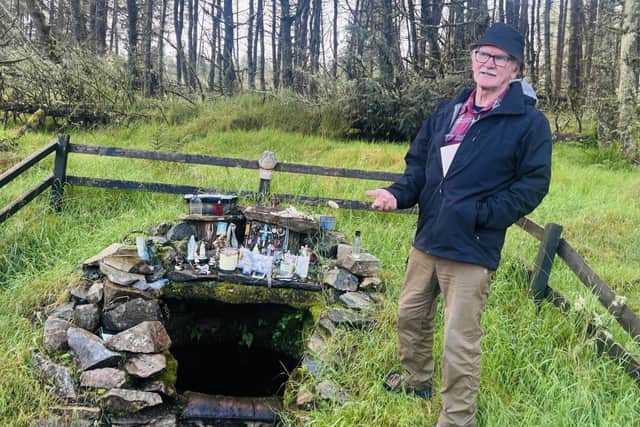
“The region also contains places where our ancestors revered sacred springs and wells, long before these watery places merged into the beliefs of early Christian Ireland. Surviving sites continue to be places of devotion and offering up to present day.”
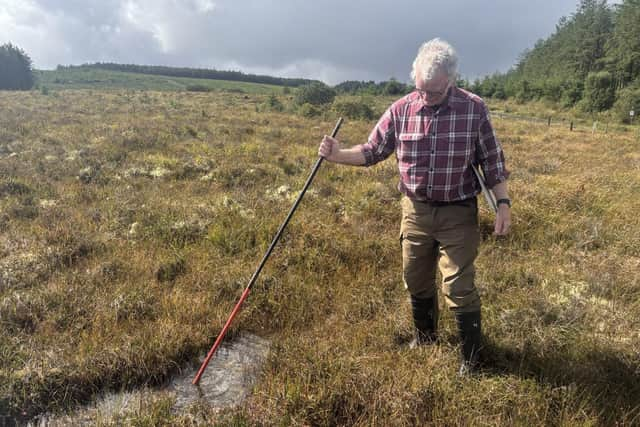
Martin takes visitors out onto boglands which were regarded as portals to the underworld by the ancients, where Morrigan, the Celtic goddess of War and Samhain was thought to lurk. The bogs Martin has found are set in quiet, evocative landscapes that feel as if the veil between worlds might still be thin.
Samhain always heralded the start of winter which could be devastating for primitive society. So much so that they made ritual sacrifices and offerings to the spirits of the underworld. And in the most extreme cases, human sacrifices were made.
“These habitats lent themselves to the supernatural and the ancients regarded them as the lid of the underworld,” he reveals. “Where strange gases would rise out of the bogs and places that would also rise and fall with rainfall levels. Winter was a difficult time for human survival, and offerings to the spirits and the rituals of the time have fed into some of the traditions and practices which we remember today at Halloween.”
Book tours at derryhalloween.com/tickets