
It will take 200 years at current pace to replace 25,000 Donegal homes, says Ward
It will take 200 years at the current pace to replace 25,000 homes affected by the defective block crisis in Donegal, a local TD has claimed.
Charles Ward said only 121 homes have been rebuilt in Donegal under option one of the Government’s remediation scheme since it was introduced.
"At the current rate of progress, it will take 200 years to redo the houses in Donegal. We have not only to do that; we have other issues too. The fact of the matter is the population is growing in Donegal and we cannot build enough houses,” said the 100% Redress TD during a debate in the Dáil on Wednesday.
Deputy Ward was among Opposition TDs who moved several amendments to the Defective Concrete Blocks (Amendment) Bill 2025 in an attempt, they argued, to alleviate the crisis in Donegal.
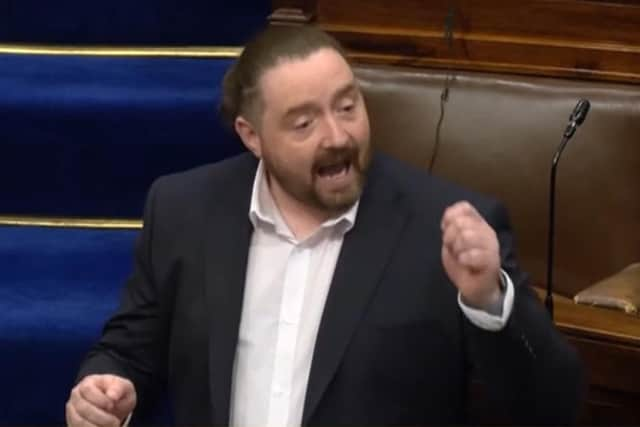

Addressing the Housing Minister James Browne, Deputy Ward said: “I am telling the Minister now that if he does not look at this in the correct manner, then what will follow will be a humanitarian disaster all over Ireland. It is already a humanitarian disaster in Donegal.”
He claimed people in Donegal were being ‘treated like second class citizens’.
Sinn Féin TD Pádraig MacLochlainn said the Government’s scheme works only for a small minority of people ‘probably in their 40s and 50s’.
"They are people who can access €40,000, €50,000, €60,000, or maybe a bit more, and they may have family who are in the building game and they can project manage it. They have the energy to do it. It works for a minority of people who are willing and will say they will put €50,000, €60,000, €70,000 or €80,000 in. However, a large majority of the homeowners have a different age profile or just cannot afford the sum of money it would take,” he declared.
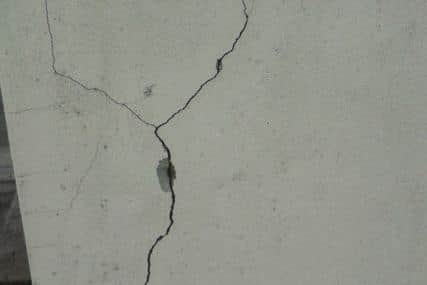
Deputy MacLochlainn’s colleague Pearse Doherty described Inishowen as the ‘epicentre’ of the crisis adding that ‘you would find it tough to walk the length of yourself and not know somebody who was living in a home that was crumbling’.
An amendment tabled by the Gweedore-based TD proposed introducing rental property activation measures to incentivise people who may have vacant properties but do not use them.
“We all know in our local communities, if we look around, that there are a lot of vacant houses. There might be a house that was in a family's ownership, the mother or father may have passed away or a brother may have passed away or so on and it was left to an individual. There are a lot of holiday homes as well in Donegal and down the west coast. This amendment is trying to incentivise,” he said.
Deputy Doherty pointed to the tax-free Accommodation Recognition Payment used to help house Ukrainian refugees.
He said: “In the county of Donegal there are over 2,000 homes that are rented out to Ukrainians and the rental income is tax free for the owners of those homes. This is in no way about pitching one over the other. It is absolutely not about that. It is about stating this already exists in law. It exists for what is called a humanitarian disaster.”
According to the last census there were nearly 10,000 vacant homes in Donegal and in addition to that more than 12,000 holiday homes, Deputy Doherty said, remarking: “As political representatives, we literally have to go to people and ask if their brother's or mother's house could be used or it a holiday home that is only occupied once or twice a year could be used.
"The people involved may not want to rent out those properties; they may never want to be landlords. However, people who own holiday homes in Donegal know there is a humanitarian crisis there.”
Fianna Fáil TD Pat ‘The Cope’ Gallagher recognised the gravity of the crisis in the county.
"When I went around my constituency, I saw buildings that are crumbling slowly in Donegal. It is not just about bricks and mortar. It is about the human factor.
"It is about the mental stress on people. It is about families who can no longer afford to send their children to school and the children who are pleading with their parents to allow them to go out and work to try to help them to repair or rebuild their homes,” he said.
Aontú leader Peadar Tóibín said: "It is hard to believe that it is 12 years since this crisis started to unfold. It is hard to believe that we still do not know how many homes, flats, offices, shops, farm buildings, etc., are impacted in the likes of Donegal or Mayo. It also is hard to believe there have been four attempts at rewriting this scheme over that period and yet we are still not at a scheme that is fit for purpose.”
He said that driving around Donegal he was struck that ‘every second building, house, council building, crèche, or business was pointed out to me as the buildings with the cracks that are starting to get worse and worse’.
“I have no doubt that if the people of Donegal were swapped for the people of south Dublin or some other constituency on the east coast, the Government would take a far different approach,” he said.
Responding to the criticisms of the Opposition Minister of State for Housing, Local Government and Heritage, Christopher O’Sullivan said: “There were accusations of a lack of political leadership and I have to dispute that. Since the Minister took up the position his focus has been on increasing supply and increasing viability. In the ten or so months he has been in the position he has introduced a range of policy measures and legislation to do that.”
All of the Opposition amendments to the Defective Concrete Blocks Bill were rejected by the Government on Wednesday.