
'It’s not just period pain': Inishowen charity encourages open conversation on Endometriosis
Across Donegal from Buncrana, to the wider Inishowen peninsula and the North West, there are young girls missing school, stepping back from sport, and quietly managing levels of pain that are too often dismissed as ‘normal’.
Buncrana Children’s Charity is now encouraging a more open and informed conversation around endometriosis — a condition affecting one in ten women and girls, often beginning during the teenage years, and one that is increasingly recognised but still not always fully understood at community level. The charity, known for its frontline support of families across the region, is encouraging families to reflect on an important question: Are we truly listening when a young person tells us they are in pain — and do we understand the impact when they feel unable to speak up?
While awareness of endometriosis has grown in recent years, the reality for many young people — particularly in rural areas — can still involve delayed recognition, uncertainty, and a tendency to normalise pain that may require medical attention.
In close-knit communities like Inishowen, where access to services can be more limited, encouraging open conversation and early understanding is especially important.

Young people may miss days — sometimes weeks — of education. Others step back from sports teams, social circles, and activities that once defined their daily lives. For many, the experience can lead to isolation, confusion, and self-doubt.
Catherine O’Donnell of Buncrana Children’s Charity recently shared her own experience — a decision she described as difficult, but important. “You’re told it’s normal. That everyone goes through it,” she said.
“So you push through. You stay quiet. And over time, you start to question yourself instead of the pain. That’s the reality for so many young girls — and it shouldn’t be.” Her story reflects a broader experience seen not just locally, but nationally — where conversations around menstrual health can still carry discomfort or stigma. Endometriosis occurs when tissue similar to the lining of the womb grows outside of it, leading to inflammation, chronic pain, and, in some cases, long-term complications. Symptoms can vary widely, including severe cramps, back and leg pain, bowel or bladder issues, fatigue, and heavy or irregular periods — all of which can significantly affect a young person’s day-to-day life. Adrian McMyler, Chairperson of Buncrana Children’s Charity, believes awareness starts with listening. “There can be a tendency to minimise this kind of pain,” he said.
“But when a young person is missing school or unable to take part in everyday activities, it’s important we take that seriously and ask the right questions.” He added that in communities like Inishowen, awareness and understanding can make a meaningful difference.
“In Donegal, we pride ourselves on looking out for one another. Parents, grandparents, teachers, and coaches all have a role to play in recognising when something isn’t right and making sure young people feel supported in speaking up.”
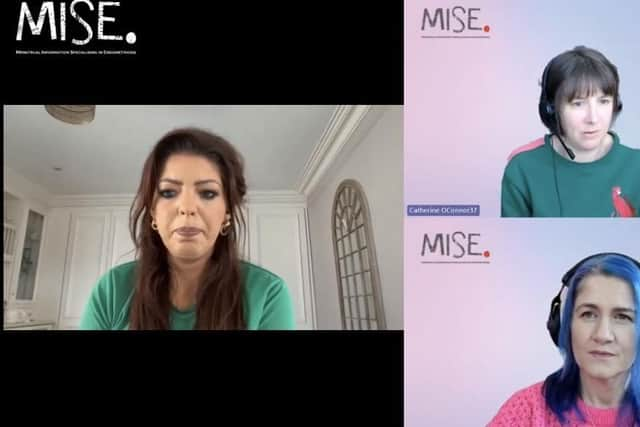
The charity is encouraging families and young people to learn more about endometriosis, recognise patterns of pain, and feel confident in seeking advice or support where needed. As part of this effort, Buncrana Children’s Charity recently facilitated a series of insightful recorded discussions. These conversations brought together members of the charity with Catherine O’Donnell, alongside Cate O’Connor and Kathleen King of MISE Ireland — an organisation that has been working tirelessly to raise awareness and support those living with endometriosis. The charity has been clear in recognising and acknowledging the significant work already being carried out by Cate and Kathleen in this space, and hopes that by hosting these conversations, they are contributing in a meaningful way to the ongoing dialogue around endometriosis. A special tribute was also paid to Majella McLaughlin, Vice Chair and Secretary of Buncrana Children’s Charity, whose thoughtful and compassionate approach during discussions with Catherine helped create a safe and supportive environment for such important experiences to be shared.