
‘I’ve seen whole families killed’ - Surgeon recounts operating on children in Gaza during Derry visit
A surgeon who has been working voluntarily on the ground amidst the killing fields of Gaza has spoken of the litany of horrors he has witnessed firsthand and the brutality being visited routinely on the traumatised and starving children, men and women there.
Dr Maynard, who first visited Gaza in 2010, has been volunteering extensively since late 2023 amidst the ongoing genocide alongside Medical Aid for Palestinians (MAP), providing life-saving care, operating in the most difficult conditions, and helping to train Palestinian surgeons and medical students.
Opening the Derry Féile on Tuesday, he delivered a speech to a packed Cultúrlann Uí Chanáin on Great James Street detailing his observations and outlining ways to assist the people of Gaza.
Speaking with the Journal during his visit to the city, the English surgeon praised Derry and the island of Ireland for their support of Palestine.
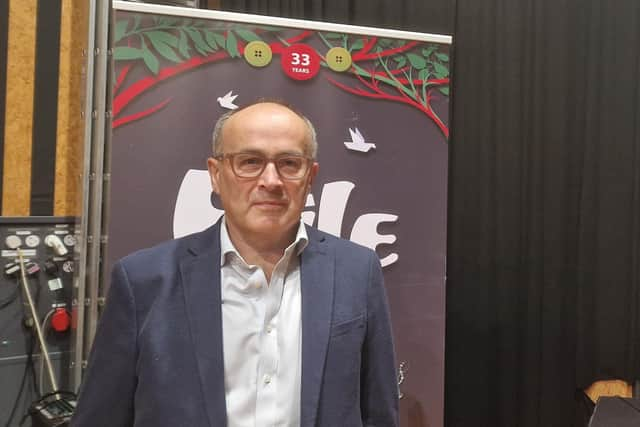

He said: “I have not been to Derry before, but I have been to Belfast a few times, and I've spent a lot of time in the Republic of Ireland as well. I think across the island, in the South and in the North, the support for Gaza is just fantastic, and I have to say it puts my country to shame. Coming here today and seeing the large numbers of Palestinian flags is wonderful to see.”
Dr Maynard's role in Gaza has changed since the start of the war. Before the war, he visited to teach doctors about cancer surgeries. On his more recent trips, he has taken on the role of a trauma surgeon “operating mainly on severe explosive injuries from bombs”.
“My first two trips were mainly major explosive injuries, devastating injuries, seeing what shrapnel can do. The bombs the Israelis use are called fragmentation bombs, which have thousands of very small metal fragments in them. They travel through the body and are white-hot pieces of metal, which cause the most appalling internal damage.
He recalled how during those first two trips he encountered a small number of gunshot wounds. “This most recent trip,” he added, “had a lot of gunshot wounds, which were almost exclusively on young male teenagers, sometimes as young as 11”,
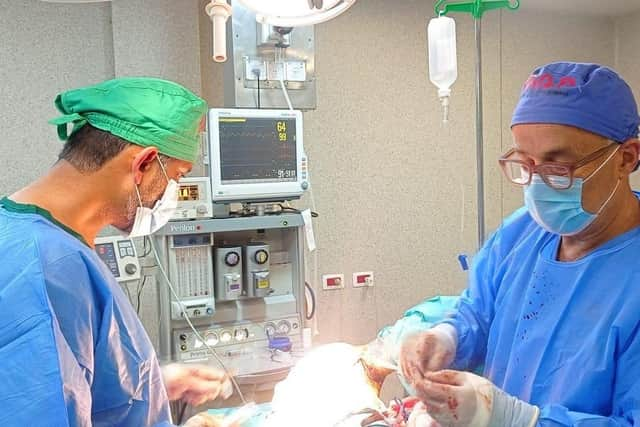
Describing the horrors he witnessed, Dr Maynard said that he had seen whole families killed, the ground littered with dead bodies of children.
He added that to the Israeli Defence Forces (IDF) it is ‘a game’. “One day they shot the head, the next day the chest; one day we had four kids who have all been shot in the testicles.”
Despite Dr Maynard’s best efforts the surgery success rates have dropped due to lack of supplies.
“The vast majority of the injuries are young teenagers we are operating on, so fit and healthy. Sometimes the injuries are so overwhelming they couldn't survive. I remember one 12-year-old died on the operating table. The problem was that the resources to look after them properly were lacking. The big problem was the lack of nutritional support; the malnutrition in Gaza is terrible. They have been starved; it's a forced starvation by Israel who are not allowing food and aid to come in.
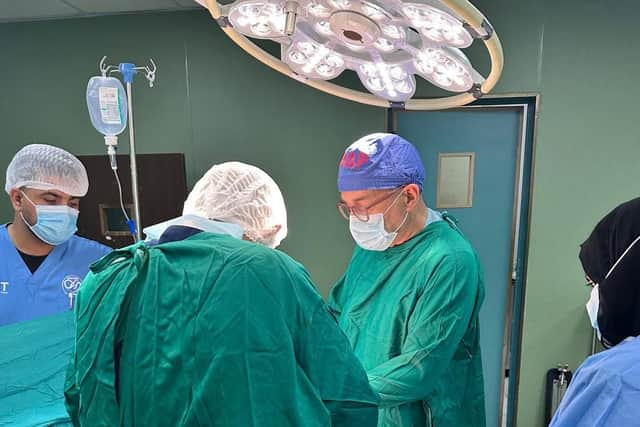
“If you are malnourished, your tissues don't heal well. Organ repairs are carried out, but they fall to pieces because they are so malnourished. When they are in hospital, we have no nutrition we can give them. The success rate of a surgery, because of the lack of nutrition, is not as good as it should be.”
He noted that he and other volunteers, alongside Gazan doctors, often feel the word "futile" best describes their surgical efforts.
“It's a very relevant word at times and we do feel that,” said Dr Maynard. “Gazan surgeons have huge experience in operating on trauma and are brilliant at operating on trauma; I’ve learned a lot from them. Sometimes they will say this patient has no chance of survival, there is no point in operating, but it’s very difficult with young people. Often you are drawn to operate on people even though you know in your heart that they have very little chance of survival. It’s a very relevant word, futility.”
On dealing with his emotions while in Gaza, Dr Maynard said: “You compartmentalise your emotions, but obviously, you get back to your accommodation later that night, and you think about it, and it’s very upsetting. Particularly when you leave Gaza, when you get home, there is a lot of emotion then.”
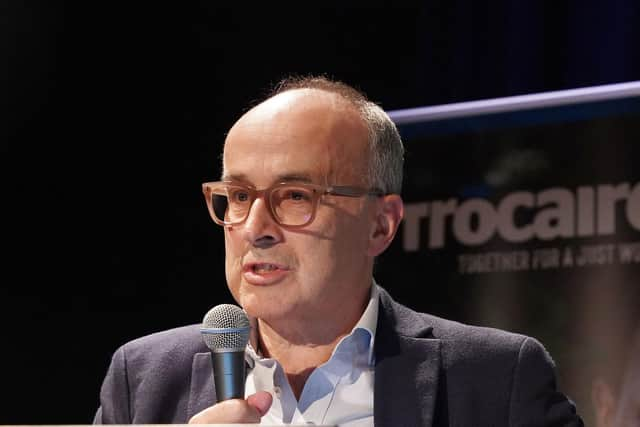
It’s when Dr Maynard comes home to England with his wife and children that all the things he has seen and experienced first hand hit him emotionally.
"You get phone calls or messages saying someone you have just operated on has died. A beautiful 11-year-old girl called Habiba, whom I spent all night operating on, she died after I left. She was doing quite well before I left. I got a phone call five days after I left saying she had just died. That was really upsetting, there were a lot of tears. After my last trip, I had a lot of issues and difficulties. I got help and counselling. You see such awful things, they are indescribable.
"I’ve been a doctor for over 40 years now. I've seen some pretty awful things, but I’ve seen things in Gaza that I just would have never expected to see, it's very difficult to cope with," said Dr Maynard.
Dr Maynard said he is driven to raise awareness about the situation in Gaza, asserting that both traditional media and the government are failing to present a complete and accurate portrayal of events.
“I want to tell people what is going on. I feel anger at my government because they are allowing this to happen; our government has been complicit in this,” said Dr Maynard.
On what people can do to help, he said: “Listening to me and other doctors; marching and vocalising your support for Gaza; donating to Trocaire and donating to MAP, and putting pressure on your politicians.”
Looking into the future Dr Maynard said: "We will look back and ask, 'How did we allow that to happen?'”
You can donate to Medical Aid for Palestinians here: https://www.map.org.uk/