
Lion’s Mane washes up on popular Inishowen beach
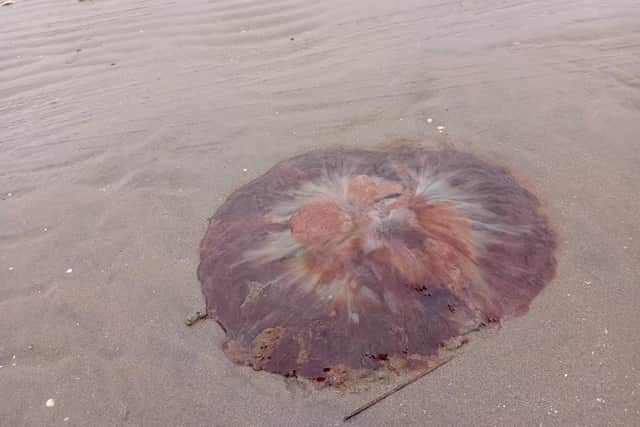
A Lion’s Mane jellyfish was spotted washed up on the shoreline of a popular Inishowen beach recently.
The animal - considered the the most serious jellyfish in Irish waters in terms of its sting – was witnessed lying close to the water’s edge at Stragill.
The Lion’s Mane (cyanea capillatais) is one of five jellyfish native to Ireland, the others being the Barrel, Blue, Common and Compass, the latter two of which are present in large numbers in the North West.
According to the Health Protection Surveillance Centre: “All jellyfish possess stinging cells, ‘stingers’, on their tentacles. Brushing against tentacles can cause the release of these stingers which contain venom (poison).

"Depending on the type of jellyfish, the stingers may not be sharp enough and long enough to pierce the skin and the skin forms a natural barrier to most stings. More delicate areas, such as the eyes and lips, might be more easily pierced.
“However, the Lion’s Mane stinging cells are much sharper and can pierce skin easily resulting in a painful sting. Jellyfish stings in Ireland are not usually life threatening and just require basic first aid and simple pain relief.”
The HPSC warns that a sting from a Lion’s Mane jellyfish can cause nausea, sweating, cramps, headaches and other symptoms.
Anyone experiencing severe symptoms after a sting is advised to seek medical treatment.
Otherwise recommended remedies include rinsing the affected area with seawater, removing tentacles, soaking with very warm water, using painkillers or antihistamines.
Do not rub the affected area or use fresh water, urine, alcohol or vinegar.