
Mobile Health Research Service launched in Derry as WHSCT aims to tackle health inequalities
The Western Trust has officially launched the first Mobile Health Research Service in the North as part of a new initiative to advance research equity in rural, socioeconomically deprived and underserved communities.
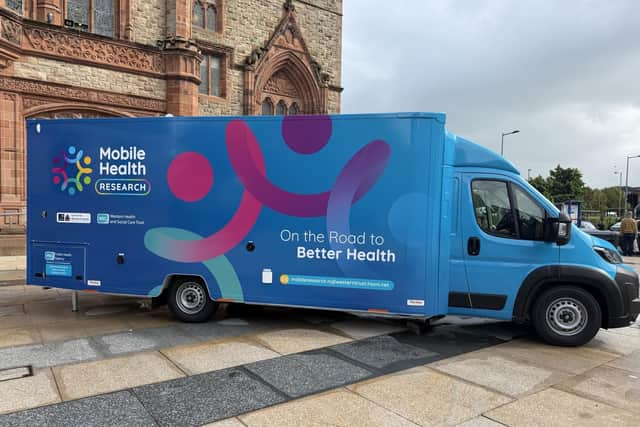
Branded Mobile Health Research – ‘Wheels in Motion, Research in Action’ and ‘On the Road to Better Health’, the service has a specially designed mobile unit that will take research out of hospitals and into the heart of communities.
The project builds on the Western Trust’s growing collaboration with the Centre for Research Equity, Nuffield Department of Primary Care Health Sciences, University of Oxford.
Speaking as the new unit was launched in Guildhall Square Western Trust Chief Executive Karen Hargan said: "Today is a landmark day for health research and research equity in Northern Ireland. For too long, many people have faced barriers to taking part in research because of where they live or their personal circumstances.
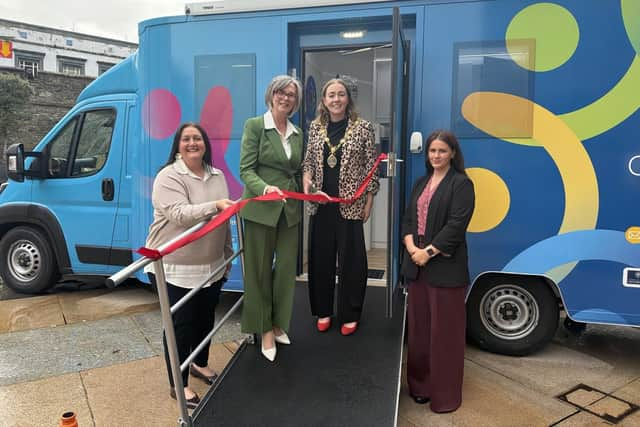

"This innovative Mobile Health Research Service will help change that. By taking research directly into our communities, we can create new opportunities for people to get involved, help shape the future of healthcare and ensure that everyone has the chance to benefit from advances in medicine and treatment.
"This is about bringing research to people’s doorsteps and making it part of everyday life in our communities.”
Professor Aaron Peace, Director of Research, Western Trust added: "Research plays a vital role in improving healthcare and developing new treatments, but not everyone has had the same opportunity to take part.
“Our Mobile Health Research Service will help remove many of the barriers that can prevent people from participating in research, this will help ensure that research is more representative of the population we serve and that more people have the opportunity to benefit from advances in healthcare.”

Professor Mahendra G Patel, Director, Centre for Research Equity, Nuffield Department of Primary Care Health Sciences, University of Oxford said: “Clinical research has the potential to improve healthcare for everyone, but only if everyone has a fair opportunity to access and take part in it.
"For too many people, where they live, their work, experiences and understanding of research, alongside barriers around beliefs, attitudes and trust, can make it difficult to take part in clinical research.
“This exciting and convenient, community-based service brings research almost to your doorstep, helping to dismantle some of those barriers, build relationships of confidence and trust, while also providing researchers with greater insight into the needs and experiences of the people they serve.
"In doing so, it can help create a stronger, more representative evidence base and importantly one that is relevant and meaningful to everyone, not just a few.”
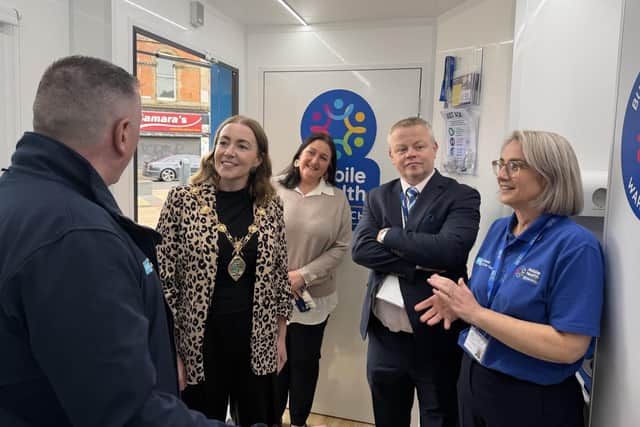
Assistant Director of Health and Social Care Research & Development (HSCR&D), Public Health Agency, Dr Rhonda Campbell welcomed the launch of the Mobile Health Research Unit.
“Research will play an integral role in delivery of the Health and Social Care Reset plan that aims to create a neighbourhood-centred system bringing services closer to people’s homes.
"The Mobile Health Research Unit is a welcome addition to Northern Ireland’s clinical research infrastructure, providing improved opportunity of access and outcomes for all in Northern Ireland and reducing health inequalities,” said Dr. Campbell.
Dr Joanna Jenkinson, Director of Research and Development Policy at the Association of the British Pharmaceutical Industry (ABPI), said: "Commercial clinical trials can deliver breakthrough treatments, but for too many people, taking part has simply been out of reach. By bringing research opportunities directly to where people live, this Mobile Health Research Unit will help us reach those who live in areas with the greatest disease burden, who have not had the same chances to take part in research.
"Research is only robust when it is inclusive, so this will benefit patients, strengthen the evidence base, and boost Northern Ireland’s standing as a destination for research investment.”
The project is focused on improving health equity and ensuring research better reflects the diverse communities it serves.
Additionally, with the help of local communities through extensive Patient and Public Involvement and Engagement (PPIE) sessions, the project reflects a simple but powerful vision: to make clinical research accessible, inclusive, and representative by bringing research opportunities directly into communities across the North.
Whether parked in a town square, community centre, workplace or rural village, the Western Trust’s Mobile Health Research Unit will bring opportunities directly to people across the North who may previously have faced barriers to taking part in research, including distance, transport, time constraints or lack of awareness.
Far more than simply an information vehicle, the Mobile Health Research Unit is a fully functioning clinic on wheels. Equipped with a welcoming reception area and two private clinical rooms, it allows trained healthcare professionals to carry out many of the same research activities that would traditionally take place in a hospital or GP surgery.
Visitors will be able to learn about research studies, discuss whether participation may be right for them, and, where appropriate, complete research appointments closer to home. The unit is equipped to carry out a range of health assessments and research procedures including blood pressure monitoring, ECG heart tests, height and weight measurements, blood sampling and other research-related health checks.
Research samples can also be safely prepared and stored on board, while participants taking part in studies can receive research medication and ongoing monitoring throughout the study period.
The initiative represents a major step forward in tackling health inequalities and ensuring that the future of healthcare is shaped by all communities, not just those living close to major research centres.
Funding is provided by HSC Research and Development Division through the industry-funded Voluntary Scheme for Branded Medicines Pricing, Access and Growth Investment Programme (VPAG).