
Lyons reminded of Bloody Sunday as he brands Derry British Army jobs fair opposition a ‘shame and disgrace’
Gordon Lyons was reminded of Bloody Sunday and accused of ‘glossing over the British Army's record in Derry’ when he called Derry City & Strabane District Council’s decision to withdraw support for jobs fairs involving British armed forces a ‘disgrace' at Stormont on Monday.
The Communities Minister said claimed nationalist, republican and socialist MLAs ‘should be ashamed of the decision that their colleagues took’ at the full meeting of DC&SDC for October.
Speaking in the Assembly on Monday DUP MLA Julie Middleton raised the motion that opposed the participation of the British armed forces at job fairs in Derry.
“Do you see the sickening irony that, less than 24 hours before nationalist councillors voted to ban our military from such events, British Army bomb disposal experts put their lives on the line to defuse a viable terrorist device at a local hotel? Is it not time that we stood up for our servicemen instead of accommodating those who seek to censor them?” she asked.
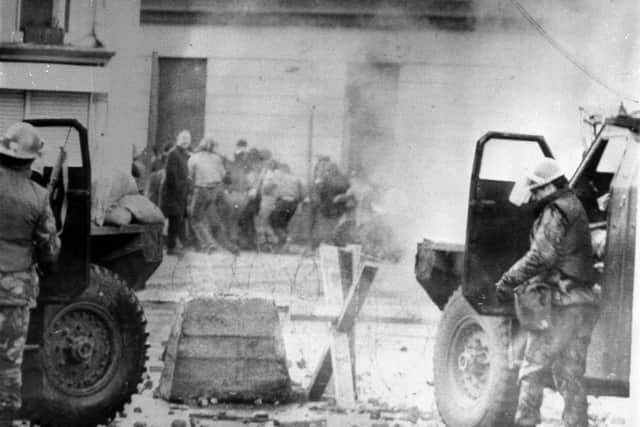

Mr. Lyons said: “The Member is absolutely right to highlight the fact that the British Army was protecting the people of the north-west and the people of Northern Ireland through the actions that it took, and she is right to point out that, less than 24 hours later, councillors said, ‘It is OK for the army to protect us, but it is not OK for people to hear about the opportunities that exist’, and that is a shame and a disgrace.”
This prompted a response from Sinn Féin MLA Colm Gildernew who reminded the minister of ‘Bloody Sunday' when 13 innocent anti-internment protestors were murdered by members of the British Army Parachute Regiment on January 30, 1972. A 14th victim died months later.
Sinn Féin MLA Philip McGuigan said: “Minister, you are glossing over the British Army's record in Derry.”
Last week DC&SDC backed the motion to oppose council participation in jobs fairs involving the British Army with nationalists and socialists supporting the proposal and unionists against.
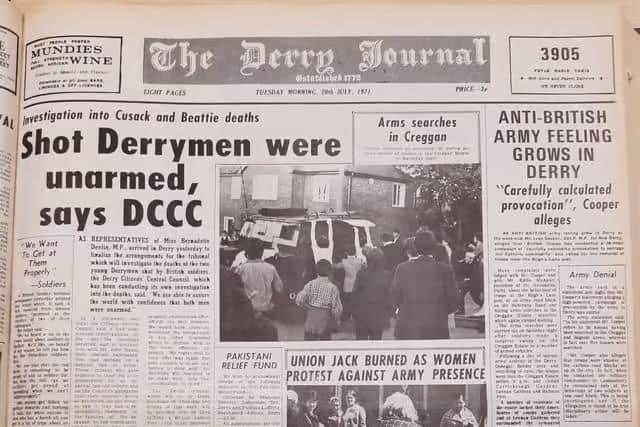
During the meeting Independent councillor Shauna Cusack spoke of the murder of her uncle Seamus as she backed the motion.
Mr. Cusack (aged 28) was the first person killed by the British Army in Derry during the Troubles.
On July 8, 1971, he was shot in the leg in Abbey Park and died hours later in Letterkenny Hospital.
At Stormont on Monday Mrs. Middleton asked the minister if the Department for Communities will ‘continue to provide direct access to military recruitment stalls in the north-west, regardless of that council's opposition, given the fact that the armed forces offer legitimate, highly respected and skilled career path’.
Mr. Lyons replied: “I want to help everybody in Northern Ireland access careers that work for them. It is an absolute shame and disgrace that the council took that decision. At its heart is prejudice towards and intolerance of people with whom the council disagrees. I understand that a job in the armed forces may not be for everybody, but why should people be able to decide that they will not allow others to hear about the opportunities that exist? It does not make sense. It is discriminatory. As I said, a deep-seated intolerance is at the heart of it all.”