
Opinion: Is Unionism in damage limitation mode? wonders veteran Derry unionist Terry Wright
Is Unionism in damage limitation mode?
There are indications that this is what polling and elections suggest.
They may not paint the full picture yet point to a trend alarming enough to produce calls for unionist unity or re-alignment; leaving voters either disenfranchised through limited choice or offered two, maybe three, for the price of one.
Driven by electoral insecurity and a scramble for a numerical majority the emphasis is on damage limitation rather than growth; and according to the DUP leader, thwarting Sinn Féin.
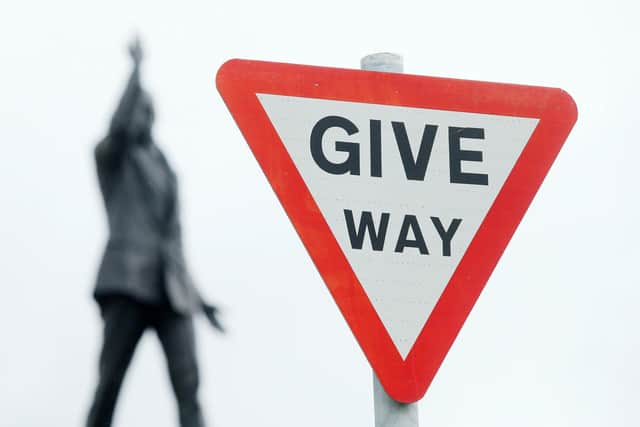

It is likely to achieve the opposite.
A choreographed headcount is not the answer; just another example of unionist short- termism.
It is the product more than the packaging that needs to be changed?
The most telling trend in the polls is the percentage of non-voters identified as likely to vote against Irish unity in a border poll; who do not vote for unionist parties.
Some are loyalists who feel ignored by mainstream unionist parties but this is only one element.
There are others. Identity politics which provide the backdrop for the rhetoric of political – primarily Protestant - unionism, is losing appeal; struggling for relevance due to consequential ‘not an inch’ positioning and non-inclusive cultural compliance.
Yet parties persist with the old tactics; like someone who has a Debit card assuming there is money in the bank because they have one.
The TUV is still to move into the political reality of the 21st century. Probably not anytime soon.
It cannot see beyond the crisis it has helped to shape.
It would do well to heed the words of Canadian Prime Minister Mark Carney to ‘take the world as you find it and not as you want it to be.’
The DUP, beleaguered by the promotion of ‘Safeguarding the Union’ and the fallacy of the ‘Stormont brake’ are now back firmly on the platform of smashing Sinn Féin and opposing all things Irish.
They do what they believe they have to, to maintain power. Looked on from the outside, it presents as the throes of a tired ritual immune to pursuing the consensual intent of the Good Friday Agreement; mining rather than challenging entrenchment.
Cosying up to President Trump and Netanyahu in spite of their ‘might is right ‘politics doesn’t widen the appeal.
It is just one dimension of a mental bloc towards a better future within political unionism; limited when it comes to avoiding polarisation and imagining what a genuinely shared Northern Ireland could look like.
A desire for the privilege and authority of old class and denominational structures lingers. This Unionism works to construct a ruling group and pursue ballot box collusion designed to prioritise this; side-lining the core purpose of politics, fragment Stormont and cause instability.
Is it offering leadership with any forward-looking sense of vision or purpose? Power is not sought to be productive; to promote a common good through social and discursive relations.
Rather, is it deemed necessary to inculcate identities, beliefs and preferred loyalties.
Transparency, scrutiny and accountability are compromised and as a result create a democratic deficit.
We have yet to hear any unionist acknowledge honestly unionism’s contribution to the trade sea border within the UK with the inevitable divergence in laws and logistics.
No Unionist party can escape responsibility for the result and what has flowed from it. Whether in full support of or tentatively opposed to Brexit, Unionism outflanked itself and lost credibility.
The balances within the Good Friday Agreement, already weakened by the St Andrews Agreement were compromised.
Post Brexit, the opportunities to focus on issues impacting on the lived experiences of individuals in Northern Ireland across different areas of life have been forfeited to contentious arguments over identity and the constitutional status of Northern Ireland.
Soon to be Leader of the UUP, Jon Burrows, MLA states his aims as leading the party are: ‘straight talking …..solution-focused….. back on the front foot……clear, confident and leading politics….. not just participating’.
It is hardly a ringing endorsement of previous leaders or of a party he has only just joined and he must know that in appealing to a disaffected electorate, a platform, loud voice and soundbites from a leadership manual are not in themselves synonymous with being a leader.
As much as it may wish to claim otherwise, elements of the old Protestant, Ulster Home Rule socially and economically conservative cultural and patriarchal attitudes remain; prominent features of what the UUP likes to claim is a broad church.
When too radical change has been targeted by a leader, the membership has persistently lacked the courage of the convictions of the change maker; holding on to old enmities rather than seeking new friends.
The number of ex leaders in Stormont, Westminster and in the House of Lords speaks to the consequences.
Whatever the reasoning, it is why, were it not for familial UUP loyalties, many members could fit comfortably into the DUP or the TUV; why electoral pacts are so easily accommodated and conversations about unionist unity never go away.
Maybe both can happen if the speculation around unionist re-alignment materialises. It might be better if it did.
It would clear the way for a less toxic, less ideologically bankrupt and issue-centred brand of politics; grounded in reality and not how things used to be.
Unionism however did not always have the best or right answers. It opposed the welfare state and electoral reform.
History shows that the prevailing cocktail of factors and conservative values constrain leadership that struggles to make the UUP, indeed unionism, relevant to a post 1998 generation of pro-union voters comfortable in their cultural hybridity, interwoven northern Irish – British identities and non-traditional faith allegiances or none.
The party has been as culpable as other Unionist parties within the structures of the Good Friday Agreement in displaying a reticent and meandering approach to the totality of the Agreement beyond Strand One and in a ‘resistant to movement’ stance when needing to build consensus around issues left from 1998.
To do this is to undermine an Agreement approved by a significant majority North and South.
The mandate was to make it work for all.
None of the parties including unionist parties have the right to allow it to fail. Reform that is now being championed should be aimed at calming troubled waters to smooth the journey, not to provide a lifeboat.
Unionism should be seeking to remove what hinders and create space for renewal; including its own failings?
Rather does it opt to measure commitment to making Northern Ireland work by how often a flag can be flown, territory marked out or distance maintained from those who were born into a different communal environment.
That is serving only to kill interest and voter engagement.
A growing proportion of pro-Union non- voters do not feel threatened by the Irish language and leave those who see its promotion as an act of de-colonisation to indulge in their inability to free themselves from the ghosts of an oppressed past; linking valid linguistic cultural survival and identity-republicanism.
They are not blind to the political pedigree and allegiances of the GAA but also recognise that for many of their neighbours who play across different codes, it is a sport which plays out as bitter local and county rivalries, yet brings communities together.
I cannot imagine that anyone who watches the final for the Sam Maguire feels any less of a unionist; any more than watching the Super Bowl transitions the observer to being an American.
It is a clear indication of the separation between culture and identity yet much of political unionism cannot embrace this reality.
This seems to be a bridge that Unionism cannot get across.
The two are not kept separate and this is reflected within.
MLA, Doug Beattie’s attempt of a few years ago to feature camogie and Irish dancing in an electoral broadcast was welcomed by some but to others presented as a step too far or as patronising and condescending gesture politics.
There’s just too much history, it seems, from which it cannot escape wherein unionism embraced a narrow religious-political cultural creed; always to play the communal card, ignore and limit the influence of the ‘other.’
For religion, politics or culture to shape or define humanness or humanity in this way, renders it past its sell-by date; beyond new packaging and beyond maintenance collaboration.
Yet it is to the latter that unionism is now turning.
With elections approaching, flirtatious calls implying unionist unity and pacts are back on the agenda; ironically coming from the DUP the party that fractured political unionism.
It is an appeal to territory and bonds of blood wherein the past casts too long a shadow. What will it achieve?
Will it address the cost of segregation?
Will it advance children learning together?
Will it end patients lying on trolleys and reduce waiting lists?
Will it provide more homes, jobs and increase productivity?
Will it address the need for a Bill of Rights?
Will it advance provision for a civic voice in scrutiny and decision-making?
Will it stop time wasting debates on global issues in which self-indulgent, mostly male MLAs, imagine themselves to have an important input?
Unionist unity is not about any of these.
It never has been and makes any call from Unionist politicians to make Northern Ireland work for all sound hollow.
The ugly scaffolding of the BGFA was there for a purpose.
Many unionists supported it because it presented an opportunity to build solution-based alliances around issues affecting the daily lives of everyone, encourage respect, parity of esteem and encourage reconciliation.
The scaffolding is still more or less in place but the consensus that it sought to nurture is under strain.
Is the unionist unity being proposed likely to restore the intent of the Agreement and improve lives?
Sounds like a contradiction in terms.
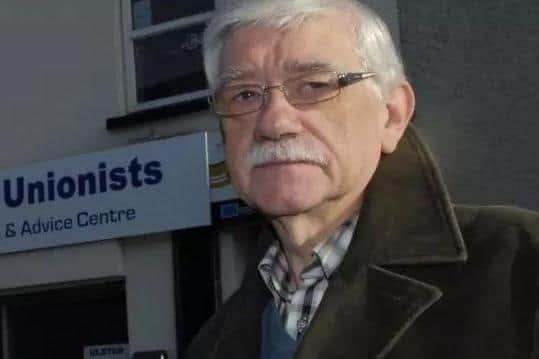
Terry Wright is an independent unionist commentator from Derry who was formerly a long-standing member of the Ulster Unionist Party (UUP).