
Permission for multi-million euro Fort Dunree 'world class' attraction refused
A multi-million euro development project at Fort Dunree in Inishowen has been refused by An Coimisiún Pleanála.
In 2021, the Minister for Tourism, along with Fáilte Ireland, announced a total investment of €12.5million to develop a new world-class tourist attraction at Fort Dunree and Head.
The funding was for the development of a ‘compelling visitor experience’ to showcase Fort Dunree and Head’s maritime, military, social and political history.
An Coimisiún Pleanála (formerly An Bord Pleanala) has now refused permission for this development on the basis that it ‘cannot be satisfied, that effluent from the development can be satisfactorily treated and/or disposed of on site in a manner that would not give rise to the risk of pollution to surface water and/or ground water.’

The Inspector, in their report, added: “The proposed development would, therefore, be prejudicial to public health and would negatively impact on the Lough Swilly waterbody achieving the relevant water quality status required under the Water Framework Directive.”
The proposed development comprised of the conservation-led restoration and upgrade of the existing visitor experience at Fort Dunree to provide a state-of-the-art visitor attraction. The proposed development involved the conservation, restoration and refurbishment of several buildings and structures within the Fort Dunree complex and the physical linking of the main elements on site including the Redoubt/High Fort, the Lower Fort and Lough Swilly.
Plans for the Redoubt Fort/High Fort included the construction of a new exhibition space, viewing gallery, comprising an events space, exhibition area, new toilets, staff room, lift and external viewing area; restoration of the existing buildings and stairs and removal of the non-original first floor structure; reinstatement and partial realignment and upgrading of pathways along the external and internal perimeter of the Redoubt Fort Walls; and works to repair and stabilise the Blockhouses.
Plans also included the restoration of the High Guns and upgrade of pedestrian access; conservation and refurbishment of the lighthouse including partial removal of an internal wall and roof repairs and external landscaping including new footpath links between existing paths.
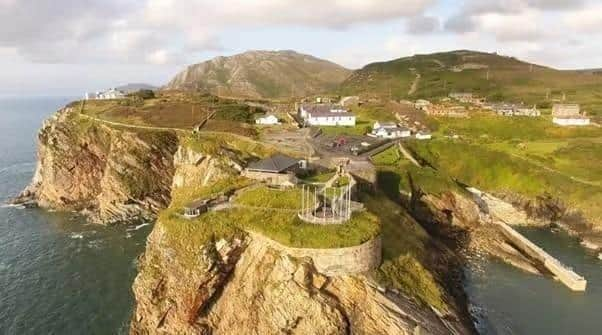
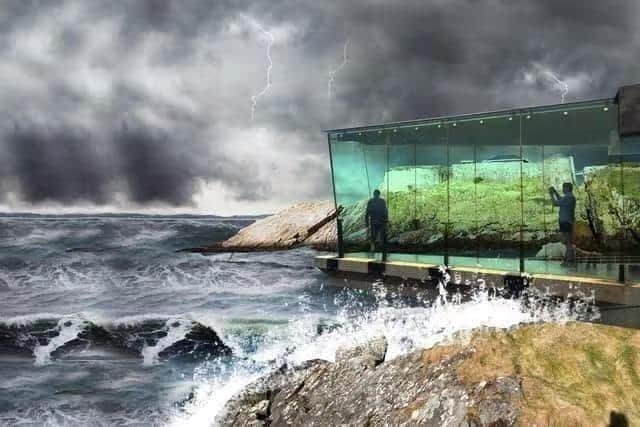
There were also plans for the Lighthouse/Northern Walkway that included a new projecting walkway, with associated metal guarding and flooring and at the Lower Fort/Lough Swilly Walkway, the construction of new walkway with glass and metal balustrades/guarding.
Additionally, the development would involve the replacement of the existing car park with hard and soft landscaping, provision of two accessible parking spaces, the construction of a new drawbridge to allow a new accessible route to the cafeteria and Lower Fort; “The Village” – conservation and upgrade of four no. block houses with new connecting pathways and repair of existing pathways. conservation and repair of the three existing metal clad billet buildings and full restoration of four brick buildings.
Two of these buildings were to facilitate a souvenir shop, pay station, toilets, store and changing facilities (Welcome Buildings) including the upgrade and extension of existing cafeteria and extended hard standing
Other works included the upgrade of existing vehicular and pedestrian access points and the associated internal road layout, new internal access road to the Welcome Buildings and High Fort to permit access for a wheelchair accessible electric vehicle, EV charging spaces, minibus/camper-van spaces and coach spaces including an accessible drop off point, the replacement and upgrade of wastewater treatment plants, new toilets, fencing, lighting, landscaping, security gate and barriers and the upgrade of electricity and water supply.
The Inspector’s report noted how there was an objective to grow visitor numbers to the site annually from 14,250 (current) to 114,191 over a 10-year period following the opening of the new development.
A number of reports were included with the submission, including a planning report and design statement, Natura Impact, Ecological impact and Archaeological impact statements and a Heritage Impact assessment.
Within the report, the inspector noted positive aspects of the development, including that that it would ‘have no adverse impacts on the protected views from the opposite side of Lough Swilly given the long-distance nature of these protected views’.
Additionally, they said they were ‘satisfied that the proposed development has been carefully thought out to respect the sensitive landscape designations within the site and that it does not introduce any obtrusive or unsympathetic features that would give rise to a significant adverse change or alter protected views.’
They added that they were ‘satisfied that that the proposed development will protect and enhance the cultural heritage of the area and that there will be many positive consequences to the scheme.’
As part of the further information request the applicant, Donegal County Council, was requested to submit fully completed Site Characterisation Reports and technical reports to demonstrate that the proposed wastewater systems at both locations would not result in any conceivable risk to the Lough Swilly Waterbody in achieving its Water Framework Directive’s environmental objectives.
Following this, the inspector said it has not been demonstrated that ‘both sites can deal hydraulically with the volumes of wastewater proposed for each polishing filter location.’
In their conclusion, the inspector said it was their opinion that ‘the applicants have not demonstrated to a satisfactory level that the proposal to treat and discharge the projected volumes of wastewater arising at this site will not negatively impact on groundwater and coastal water quality.’
"Therefore, I recommend that the development be refused permission on the grounds that compliance with the objectives of Article 4 of the Water Framework Directive has not been demonstrated.”
You can reads the full report on the An Coimisiún Pleanála website at https://www.pleanala.ie/en-ie/case/320352