
RQIA reports on Altnagelvin staff and patient concern over pathway for Fermanagh emergency surgery patients
An inspection at Altnagelvin and the South West Acute Hospital has called for improvements to pathways for patients being transferred to Derry for Emergency General Surgery (EGS) amid reported concerns from patients and staff.
The Regulatory and Quality Improvement Authority (RQIA) carried out unannounced inspections in Derry and Fermanagh between November 2025 and February 2026.
This followed the temporary suspension of services at SWAH in December 2022 and the establishment of a new pathway for EGS patients from Fermanagh who needed to be treated in Derry.
In 2024 the RQIA conducted a review of the EGS service and made several recommendations, including that patients being transferred should not have to endure double waits in EDs in Fermanagh and Derry.
The aim of the RQIA’s new inspection – the results of which were published on Wednesday – was to continue to assess the effectiveness of the temporary EGS pathways, and ensure quality and safety processes are embedded.
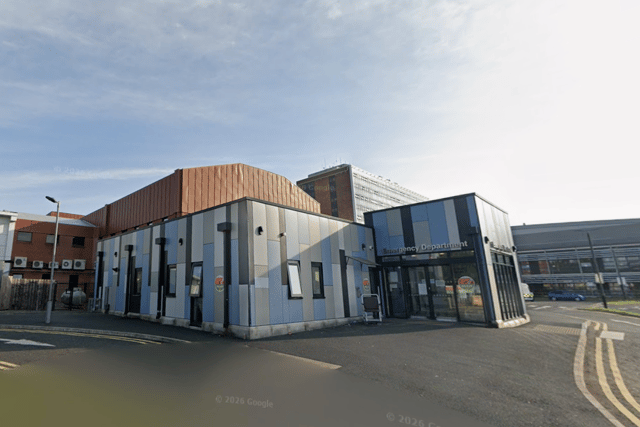
The inspection was conducted at the two Emergency Departments; at SWAH and Altnagelvin; and the Altnagelvin surgical wards.
It found that since the Review, the Trust has made progress in a number of areas including improvement in ‘direct to bed’ admissions from SWAH to Altnagelvin, when a decision has been made at the SWAH ED that a patient needs to be admitted to the Altnagelvin surgical wards.
The Trust has recently reported achieving 97 per cent of patients transferred from SWAH going directly to a surgical bed in Altnagelvin.
The Trust has also undertaken a number of audits, and the findings have informed actions, resulting in improvement.
A full staff complement in the surgical team has also been secured.
However, the inspection identified four areas for improvement. The need for:
- Consistent application of EGS pathways with clear shared documentation and understanding across all staff groups;
- Effective staff engagement, communication and collaborative working;
- Audits to be undertaken consistently, and sustained to provide information on outcomes for patients, specific to the pathways and the population groups affected; and to enable insights to be developed to guide further improvement
- Strengthening of risk and incident management and a sustained focus on applied improvements.
RQIA Chief Executive Briege Donaghy said “We are often asked in our role as regulator if a service is ‘safe’. Sometimes it is thought this can be answered simply by one measure or factor. The reality is that it takes a number of systems, processes and applied learning to be in place to create the culture for a service to be safe and effective on an ongoing basis.
"Achieving a safe and high quality service needs a continuing focus on the clinical outcomes for patients; as well as close attention to patient and staff experience. It requires constant review of the inherent risks in the service and that, when incidents occur, processes are in place that will ensure actions are taken to reduce the potential for them to recur.”
Karen Hargan, Western Trust Chief Executive welcomed the report and its recognition of the ‘significant progress made across our EGS pathways, including improvements in patient flow, clinical outcomes and patient safety’.
She said it complemented an independent Caspe Healthcare Knowledge Systems (CHKS) review, which confirmed ‘improved outcomes and a significant reduction in mortality following the service changes’.
“The report also recognises the Trust’s achievement where 97 per cent of patients requiring transfer from SWAH are admitted directly to an inpatient surgical bed in Altnagelvin Hospital.
"In addition, an average of 5.6 patients per day with emergency general surgery- related conditions continue to receive same-day or next-day treatment through the Emergency Surgical Ambulatory Assessment Unit at SWAH, while an average of 2.5 patients per day require transfer for inpatient admission to Altnagelvin Hospital.
"We remain committed to maintaining safe, effective and sustainable services for our population and welcome the recommendations identified by RQIA,” she stated.
The new report notes that that ‘EGS pathway patients transferred from SWAH formed a small proportion of the total Altnagelvin Hospital admissions (reported as 2.4 patients per day at the time of inspection)’.
It also acknowledges that ‘there was a statistically significant reduction in mortality rate for patients undergoing emergency surgery within the Trust’ following suspension of the service in SWAH in 2022.
But the RQIA reports that ‘no additional resources have been provided or commissioned to alleviate pressures experienced by NIAS to support the changed pathways in terms of increased transfer activity, or out of area journeys to Altnagelvin Hospital’.
This has contributed to ‘strained relationships’ between SWAH ED staff and NIAS crews.
"During the inspections, and on both hospital sites, staff reported ongoing challenges with the implementation of the pathways. These challenges are impacted by NIAS’s ability to respond to patient transfers in a timely manner, and challenges to decision making on patient acuity and urgency of transfers.
"Notwithstanding the Trust’s protocol in place for transfers, ambiguity was reported around clinical ‘ownership’ of the patient while waiting in SWAH for transfer, and delays in handovers from NIAS on arrival at Altnagelvin Hospital. These issues have led to strained relationships between SWAH ED staff and the NIAS ambulance crews.
"A concerted effort is required to restore and improve relationships and communication both within the Trust staffing and with the NIAS workforce to strengthen collaborative working,” the RQIA report observes.
Surveys and interviews were conducted with patients who relayed concerns about the service.
“A number of respondents stated that whilst care was compassionate and effective in some cases, patients and/or their relatives did not feel safe or protected from harm in Altnagelvin Hospital ED,” the report notes.
A majority of staff respondents at Altnagelvin felt ‘service users were not safe and protected from harm’ and that ‘care delivered to service users was not effective’.
Staff at Altnagelvin reported ‘they were disheartened when they have to inform patients who come from SWAH and who expect to receive a bed upon arrival that they cannot be admitted to a surgical bed as one does not exist’.