
Storing dahlia, begonia and calla lily tubers over winter - Gardening with Brendan
We've yet to experience a hard frost or dip below zero degrees here in the north west of Ireland but the shorter day length has signalled to plants everywhere that winter is coming and most plants have begun the process of producing seed, dying back and for perennials, redirecting their energy into their roots, bulbs and tubers for next year.
With a lot of perennial plants the only overwintering care they need is a trim back once their foliage starts to die off but for others, including some of the most popular plants in the garden, special attention is required to ensure they will survive and return every year.
Native to Mexico and parts of north America, Dahlias are one of the most popular plants in the world and with good reason. As well as being among the most beautiful, profuse and diverse showstoppers, these long flowering plants are pollen and nectar rich and as such provide an important food source from mid summer to autumn for all sorts of insects.
Dahlias in the ground and in pots are vulnerable to being killed by a freeze or due to tubers rotting in waterlogged soil.


Some may well survive outdoors, particularly if a thick mulch is applied to help protect the plant but a lot will not come back.
That's why it is a good idea to dig them out, cut back the remaining foliage, clean and air dry the tubers before storing them over the winter.
This can be done either before or after the first light frost of autumn or winter. If in the ground, use a garden fork a good distance out from the plant to loosen the soil around it before lifting to limit the risk of damaging or slicing the tubers. Once out, cut the foliage and stalks down to around an inch or two and clean the soil off the tubers. Then place them on some newspaper or dry cardboard to air dry, discarding any that are mushy, diseased or withered to prevent the others rotting. They can be air dried out of direct sunlight until dry to the touch, which can take up to a week.
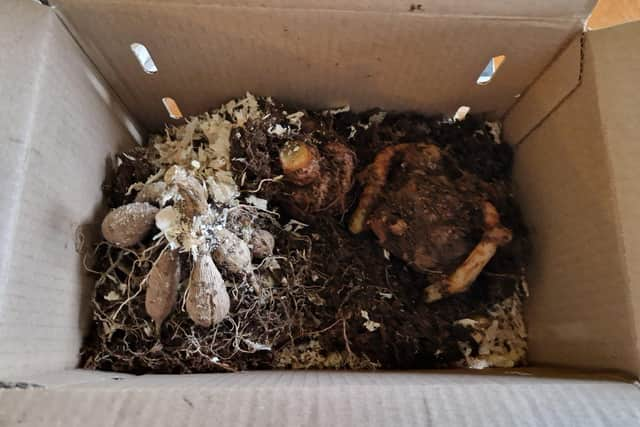
After that, store them in a bed of dry compost, peat moss or sawdust inside a box or wrapped in newspaper in a cool dark area with some airflow. Check fortnightly or at least monthly for any rot and discard any tubers that are discoloured or infirm.
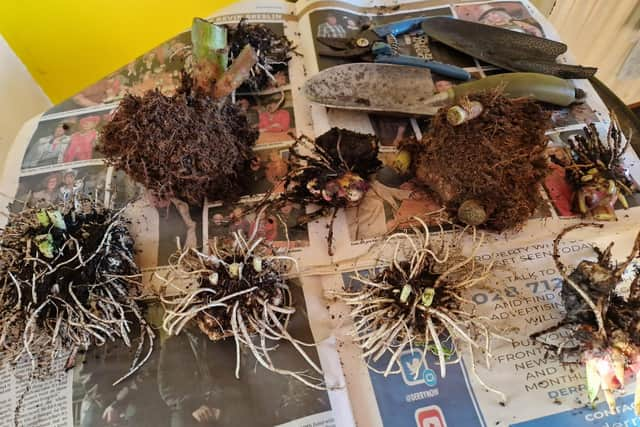
If you have a shed or glass or plastic greenhouse there is also the option to just cut back the dahlias and leave them in pots in compost over winter out of the direct sun, although they may still need protection in very cold weather.
The process is very similar for tuberous Begonias, which should be lifted before a frost and cleaned and dried in the same manner. With Begonias however check the tubers every month and if they feel really dry give them a little spritz with water.
With Calla Lilies, it is best to lift them before temperatures drop below 5 degrees Celsius. Follow the same process and trim back the foliage to about an inch above the tuber. Also trim back about two thirds of the the long roots attached to the tubers. Again check these periodically and spritz if very dry and discard any soft tubers. You can also divide the tubers if new ones have grown and allow the exposed skin at the joins to the main tuber to callous and harden before storing.
With all three you can then just pot them up in mid to late spring and give them a drink to waken them up. Keep them protected until after the last frost date, usually around May in Ireland, and then plant them on into bigger pots or in the ground.
This process also gives the plants a chance to develop and particularly in relation to dahlias, protect soft young leaves from hungry slugs and snails as they are particularly prone to damage.
A little effort now in the autumn ensures you'll enjoy these plants for years to come rather than having to replace them.