
Budget 2026: Executive to get an extra £270m through Barnett formula
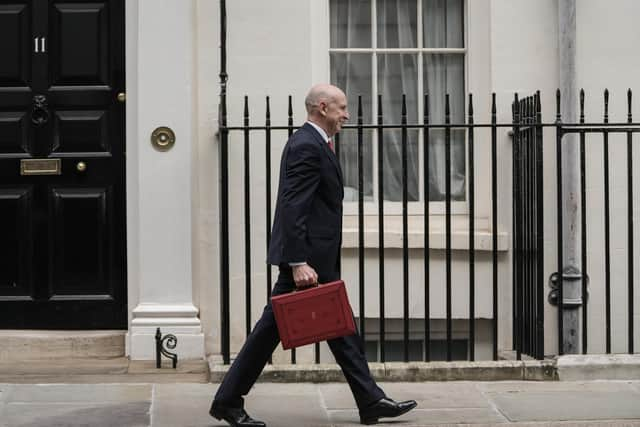
The Northern Ireland Executive is to receive an additional £270 million through the application of the Barnett formula following measures taken by John Healey in his Budget 2026.
Few specific new measures for the North were unveiled by the British Chancellor of the Exchequer on Wednesday, although monies will flow to the Executive due to the British Government raising expenditure in England.
Among the new initiatives announced was £1 million of new funding for a Northern Ireland Investment Summit intended to build on the North’s ‘economic potential and attract foreign investment’.
This, it was declared on Wednesday, will build ‘on the success of Belfast’s 2023 investment conference, will strengthen East-West trade, and will highlight Northern Ireland’s potential as the only place in the world with dual access to the UK internal market and EU market’.

Belfast, meanwhile, is to get ‘£7.5 million of new R&D investment for Queen’s University Belfast’s Centre for Secure Information Technologies (CSIT) Cyber AI Hub’.
According to the Treasury this will ‘further grow Northern Ireland’s globally strong cybersecurity and AI sector, which employs over 2,700 people across 140 companies’.
Under the Barnett formula – named after the late Labour minister Joel Barnett who devised it in the 1970s – the North’s ‘block grant’ increases in proportion to rising Government expenditure in Britain-only.
As a result of the measures announced in the Budget the North is to get an additional £270m. Scotland it getting an extra £600m. Wales will receive £450m more.
Mr. Healey’s Budget claims that the Northern Ireland Executive is adequately funded to provide public services across the North.
It states: “Delivering growth in every postcode is a responsibility the UK Government shares with the devolved governments in Scotland, Wales and Northern Ireland, and they are well funded to deliver their devolved responsibilities.
"The government will work with the devolved governments and local and regional stakeholders in Scotland, Wales and Northern Ireland to explore how the benefits of regional empowerment can be spread to all parts of the country.”
In his speech in the British House of Commons on Wednesday, Mr. Healey mentioned Ireland just three times, firstly, to encourage the Executive to use its Barnett to fund a £100 one off energy payment for lower income households.
The other references were in relation to the £7.5million Belfast is getting for AI and cyber in Belfast.
His Budget document, however, does mention how the North will particularly benefit from a reduction in tariffs on kerosene and fertiliser.
“This will lower production costs for the UK’s agricultural sector and support households that rely on heating oil to heat their homes, including many people in rural areas and Northern Ireland. Food and kerosene suspensions will be in place for two years until December 2028. Fertiliser tariffs will be suspended until December 2027,” it states.
It also highlights how the North will receive a Barnett allocation to fund a new British Industrial Competitiveness Scheme that will take 25% off electricity bills for 10,000 energy intensive firms in April in Britain.