
Delargy calls for action over persistent ‘double taxation’ for Derry-Donegal workers
Pádraig Delargy has called for action over the issue of persistent ‘double taxation’ faced by cross-border workers in the Derry and Donegal area.
Although the Ireland-UK Double Taxation Convention (DTC) aims to prevent instances of double taxation both the Irish and British governments have acknowledged this may need updating to take account of the complexities arising from hybrid cross-border working.
Sinn Féin MLA Pádraig Delargy raised the matter in the Stormont Assembly.
“Double taxation continues to be a huge issue for people across many border communities such as mine. It is a block to many people in accessing employment. Partition continues to create barriers, and Brexit has made them worse,” he said.
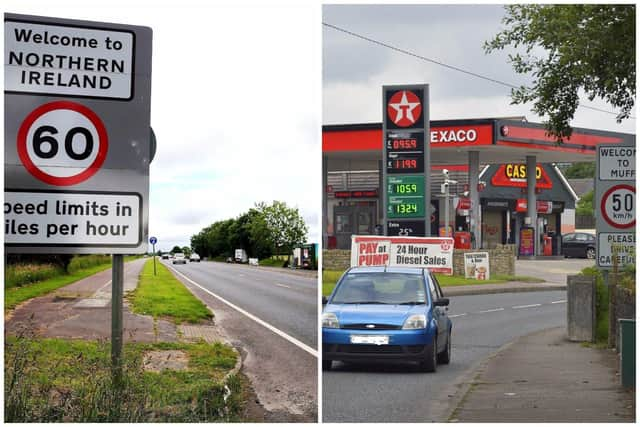

Mr. Delargy pointed to the IBEC-CBI Joint Business Council’s report on All-Ireland Labour Mobility report that was published during the summer, which highlighted ‘the barriers that remain around taxation, social protection and employment’.
He also noted an Economic and Social Research Institute report that showed up to 19,000 people regularly move across the border in both directions for employment.
“We therefore have a system in which people who move between Derry and Donegal or Newry and Louth, and in many of our other border communities, face double taxation and a system that treats them unfairly, first in accessing the workplace, and, secondly, in how they interact with the workplace, particularly with regard to taxation and administration.
“We see that particularly in the case of remote and hybrid working. Employers can be reluctant to recruit people in the North because of the cross-border arrangements, which are much too complicated,” said Mr. Delargy.
The IBEC-CBI report welcomed Taoiseach Micheál Martin and former British Prime Minister Keir Starmer’s commitment, following an UK-Ireland Summit 2026 in Cork in March to ‘engage on reaching a decision in principle this year on a bilateral Ireland-UK approach to address concerns arising from hybrid cross-border working and to consider other aspects of the UK Ireland Double Taxation Convention which may require updating.’
The paper states: “CBI NI and Ibec members are keen to see the governments progress this commitment and believe the bilateral approach should address key barriers preventing frictionless cross-border working.”
The report cites the example of an unnamed technology company based in County Donegal that employs ‘around 1,000 people across data, technology, and payment services’ and which has ‘historically relied on cross-border talent, particularly from nearby Derry’.
"The company previously employed 60–70 cross-border workers and viewed access to talent across the North West region as a key part of the site’s value proposition for investment.
"The growth of hybrid working significantly increased challenges around dual payroll and cross-border compliance. Concerns arose that employers could face audit risks if employees were not managing their tax obligations correctly across jurisdictions.
"Employees also experienced difficulties linked to their cross-border status, including around maternity leave, mortgages, bank loans, pensions, and other entitlements,” the authors noted.
The paper highlights that the company explored potential mitigations to continue facilitating hybrid cross-border, including managing employee tax compliance internally, but found the administrative burden and associated risks too significant.
"To avoid this risk, the company ultimately took the decision last year to stop hiring people based in NI and limit NI-based employees to fully in-person or fully remote work,” it states.