
Vikings on the Foyle & Bann: 833-997AD: Derry Journal Our Space 34
In 795AD the Vikings first raided in Ireland. But they’re not recorded at Derry until 833 when Niall Cåille, King of Aileach, defeated a viking attack here. And for decades there followed intense Viking attacks all around Ireland.
In 839AD, the Norwegian leader Turgesius sailed a fleet down the River Bann into Lough Neagh and raided the surrounding area.
In 866, Åed Findliath, king of Aileach and now High King, routed the Vikings. “A king of greatest prowess in his time”, said the Annals of Ulster, Aed defeated the Vikings and their Irish allies at “Glenn Foichle” (Glenelly). And “inflicted a great rout on the Norse-Irish in Glenn Foichle and a vast number of them were slaughtered by him”. The Annals of the Four Masters say that Aed’s 1,000 soldiers defeated 5,000 Irish and Vikings.
From 876 there were ‘40 years of peace’ and few attacks.
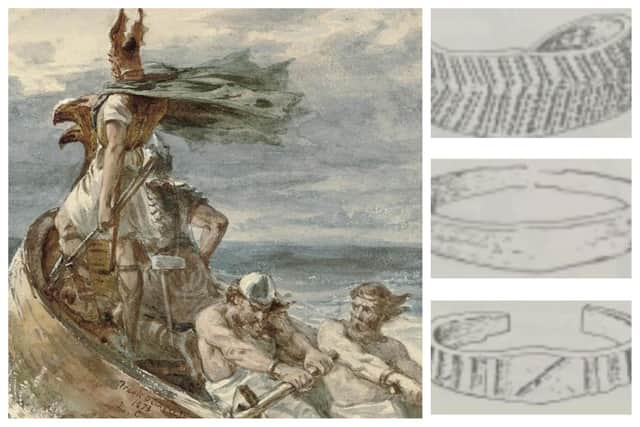

But in 921 there were Viking fleets in Lough Foyle and Mulroy bay. And from 922-37 they continued to use the Bann for semi-permanent Viking settlements on Lough Neagh.
In 990 and 997 Derry was again plundered by ‘the foreigners’. And tradition says that Dunnalong (Dún na Long - Fort of the Ships), midway between Derry and Strabane, was once a Viking settlement.
But as well as robbery and seizing slaves, by the 900s they founded towns and integrated with local people. As with all immigrants everywhere, the separate identities blended. Now many well-known Irish names have Viking origins: McLaughlin, McManus, McAuliffe, O’Rourke, Cosgrave and, yes, O’Higgins.
But next the Normans were coming.
Dublin Viking Museum: [email protected]