
Watch: Rare albino mustelid walking along the rocks at Stragill - is it a stoat, ferret or mink?
Walking over rocks between Linsfort and Stragill the ‘Journal’ bumped into an unusual critter on the shores of Lough Swilly at the weekend.
Initial suspicions were that we had stumbled across an Irish stoat (mustela erminea hibernica).
It might also have been a fugitive ferret (mustela furo), a domesticated mustelid often kept as a pet.
Or was it a descendant of one of the many American mink (mustela vison) that went native after escaping from fur farms in Ireland in the 1950s and 1960s.


The animal’s luminous coat suggests albinism or leucism as the coats of none of the animals mentioned above are naturally white.
While in Northern Europe and Britain the stoat’s ‘ermine’ coat turns white in winter the Irish variant remains brown year-round.
The ‘Journal’ asked local naturalist and keen observer of our local wildlife Mick Conway for his opinion.
“It is obviously something albino from the colour. The ferrets I have seen are a a kind of dirty white colour but that does not exclude an albino version.

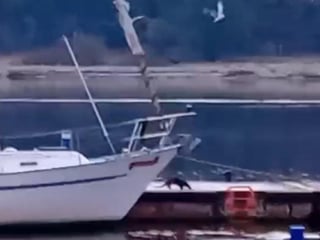
"Stoats are known as weasels in Ireland. In colder countries they turn white in winter and are known as ermine but this does not happen in Ireland. It’s not cold enough.
"Mink are now common in Ireland after they either escaped or were released from the 1950s onwards. Albino versions, like all albinos, are rare but do exist.
"They occupy the same habitats as the native otter either by rivers or by the sea. The location of this photo would seem to indicate it was an albino mink,” he offered.