
Fish and other aquatic life in several Donegal rivers affected by toxic spent sheep dip: EPA
Several Donegal rivers have been affected by the inappropriate disposal of spent sheep dip with toxic repercussions for fish and other aquatic wildlife.
The Environmental Protection Agency (EPA) has identified the problem as one of five priority challenge areas when it comes to monitoring hazardous waste.
Progress on managing pollution from spent sheep dip in Donegal is outlined in the EPA’s mid-term evaluation of Ireland’s National Hazardous Waste Management Plan 2021-2027 which shows mixed results in terms of implementation.
"Sheep dipping is a method of agricultural pest control where sheep are immersed in water containing insecticides. Spent sheep dip is highly toxic to aquatic animals and must be disposed of correctly. Several rivers in County Donegal have been affected by inappropriate disposal of spent sheep dip,” the newly-published report states.
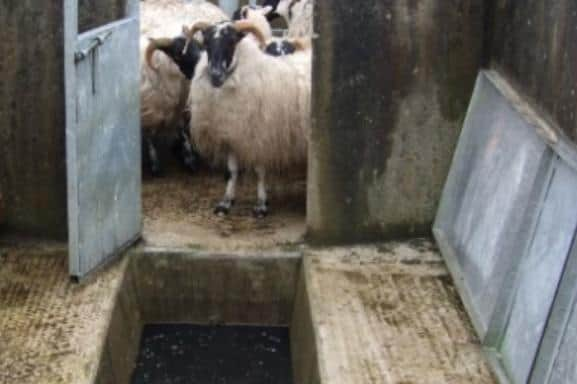

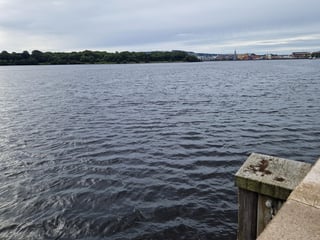
Incidents of pollution in the River Finn between Fintown and Cloghan and in the River Murlin in Glencolumbkille were specifically highlighted.
"EPA biological monitoring has found toxic impacts in the Finn and Murlin Rivers where dipping baths were located upstream of the monitoring points in otherwise good habitat catchments.
"Donegal County Council has undertaken countywide information campaigns and a Catchment Care project in the Upper Finn Catchment. This focussed on education of farmers through surveys and information provided at sheep marts in the area, an instructional video covering a training day on best practice, and a trial on integrated constructed wetlands (ICW) at three dipping bath sites.
"Recent monitoring in 2024 has shown improvements in aquatic life in the Upper Finn River and further research is to be undertaken on the effectiveness of the integrated constructed wetlands in 2025,” the report states.
The report outlines how a cross-agency forum on the disposal of waste/spent sheep dip was convened in 2024 with representatives from the Department of Agriculture, Food and the Marine (DAFM), the EPA, Donegal County Council, the Local Authority Waters Programme (Border Region), ACRES Cooperation (Donegal).
Among the outcomes are a proposal that from September 2025 ‘sheep dipping products will be classified as Prescription Only Medicine (POM)’ and will ‘require an electronic prescription for purchase’.
"This should provide further control on the sale of sheep dipping products and allow monitoring of use by DAFM,” the report explains.
Several challenges have been identified for the appropriate management of sheep dip and disposal of spent sheep dip, however, including the ‘regulation of mobile dippers, particularly those operating across jurisdictions, and engagement with the relevant authorities in the North on cross border issues’.
Equally, the ‘viability of an authorisation process for disposal of spent dip, including any potential licensing requirements for storing/transporting/disposing of spent dip and the classification of sheep dip and spent sheep dip as hazardous or non-hazardous’ could be problematic.
Commenting on the report, David Flynn, Director of the EPA’s Office of Environmental Sustainability, said: “Our report, published today, highlights a strong case for investment in Ireland’s hazardous waste treatment infrastructure.
"This is needed to ensure highly polluting hazardous wastes are properly and safely managed. Ireland exports half of its hazardous waste for treatment. We cannot continue to rely on other countries to treat significant quantities of hazardous wastes generated in Ireland.”