
Potential to generate £4.5bn for economy and 5,500 jobs at Foyle Port by 2036: Luney
Foyle Port boss Ian Luney believes half a billion pounds for the North West economy and 5,500 local jobs could be generated through investments in green technology and energy and data and AI infrastructure at Lisahally by 2036.
Mr. Luney told the Stormont Infrastructure Committee: “When we employed an international independent consultant to look at the economics of our strategy and masterplan, if the brakes were taken off, if I use that phrase, and we could invest and others invested to the scale we think they can, then the Gross Value Added (GVA) by 2036 for the region is nearly half a billion.
“That's for the North West region, and the number of jobs that could be created is 5,000 if - and that's a big if - if we can deliver our strategy in partnership with other investors clustering around Foyle Port, around those different technologies. It's a massive opportunity. It is a gamechanger opportunity for the North West.”
This echoed a recent submission to the Northern Ireland Affairs Committee that suggested an AI Growth Zone designation in Derry could help facilitate investment with the potential of generating ‘up to £450million in regional GVA by 2036 and up to 5,500 jobs (direct and indirect) in the region’.
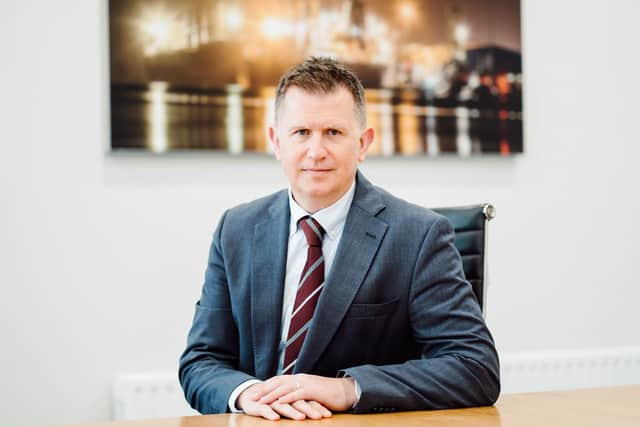

The port chief made the comments after travelling to Stormont with the Chairman of the Port and Harbour Commissioners Ryan McCready.
They were part of a delegation briefing the committee on Stormont’s Harbours Bill.
Messrs. Luney and McCready said they supported the legislation and hoped that it will lead to a reclassification of Foyle Port’s Office for National Statistics (ONS) borrowing classification. This limits the amount it can borrow to invest.
As a trust port the harbour is currently classified as a public non-financial corporation and as such its borrowing requires capital budget cover from the Department for Infrastructure.
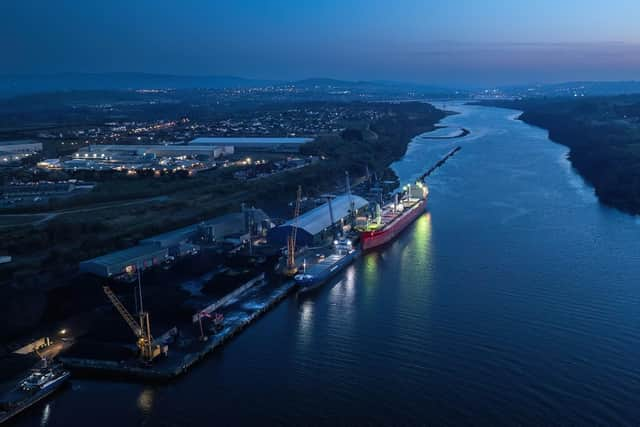
This limits the amount of debt the port can take on. Reclassification would lift Foyle Port’s borrowing limits and allow it to invest more.
Mr. Luney told the committee that the harbour is ‘not proposing to build a power station or a battery storage facility’ but is seeking to facilitate investment in vital new and emerging technologies in partnership with others.
"We have the infrastructure in place, the land, the connectivity, the roads, all of that in place so that third parties can invest in low carbon technologies, off-shore wind, green manufacturing, grid stability, data hosting, whatever it is,” he said.
Foyle Port’s unique position straddling both jurisdictions on the island is a strategic advantage.
Mr. Luney said the harbour’s long-term vision was strongly aligned with the policy objectives of both the Irish government and the Executive when it came to boosting trade and exports and developing ‘the low carbon energy technologies we need to decarbonise our economy north and south’.
"We then look at the off-shore opportunities that will develop off the North Coast. They are lagging behind the east coast for sure but we see it coming in ten year's time so we want to be ready for it,” he said.
Mr. Luney spoke of the potential for growth in data storage and AI.
"When you think about the data side of things in terms of how much data is now used by every element of government and how it benefits society, we need, in the right location with the right size and with the right technology, some means of storing data and we have it in the North West.
"It is nothing to be frightened of. It aligns with the needs of the energy system in terms of new demand. It will help rebalance the grid, it will help secure renewables, so all of our stagy is all aligned with policy in Northern Ireland, Ireland and UK wide,” said the Port boss.