
Derry factory woman who led fight for workers' rights to be honoured
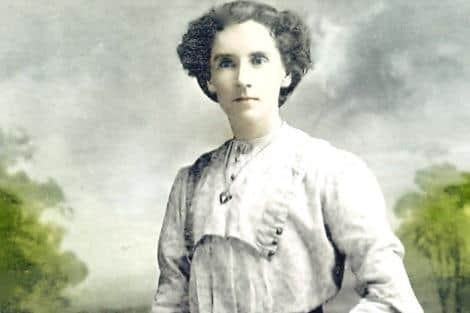
Derry woman Sarah Doherty, who fought for the rights of workers in the face of unemployment and the hostility of employers, is being commemorated with an Ulster History Circle Blue plaque.
Sarah Doherty was born in 1884, the third daughter in a family of 13 children. She went to work in the shirt factory at the age of 14. Her father was Manasses Doherty, her mother was Sarah (neé McDaid). They lived at 9 Wellington Street in the Bogside.
She got involved in trade union activity around the time of the shirtcutters’ strike in 1913, and campaigned for better pay and working conditions for women, who were paid at a lower rate than men and less than in similar trades in England.
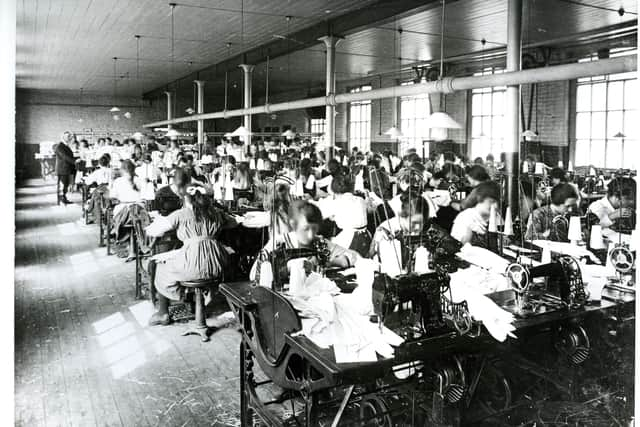
From the late 19th century, Derry became the main centre for shirt and collar manufacture in these islands. The most important reason was that wages were lower than elsewhere. Shirt-making in the city reached its peak in the 1920s, when some 18,000 people were employed, over 90 per cent of them women. It was an industry of huge importance to the local economy, not least because of the shortage of jobs for men.

The huge numbers of women employed resulted in a tremendous sense of camaraderie in the factories, though it wasn’t always reflected in trade union membership or activism.
Unemployment and hostility from employers made recruiting more difficult in the 1930s, when Sarah Doherty became a full-time trade union leader. She was appointed organising secretary of the Derry branch of the Tailor and Garment Workers Union in 1932. In March that year she reported: “During the past month, trade has not been good here... Owing to the scarcity of employment, considerable apathy exists among the workers with regard to trade unionism. They do not seem to realise that the period of bad trade is the most dangerous time for wage earners, and is the time of all others when they should rally to their union. We are at present engaged in an organising campaign…”
Her hopes for increased recruitment were in vain. In the early spring of 1934 she was made redundant. She continued as Branch secretary on a purely voluntary basis.
Efforts to improve the workers’ lives were held back by divisions among their representatives. Doherty’s own Tailor and Garment Workers Union had previously been two separate organisations. In 1932 she had been full of optimism about the amalgamation: “Our strength is at last united, and I have no doubt that the result will be for the lasting betterment of the working conditions in the clothing trade generally…Our shop stewards will now be able to deal more effectively with the mean non-unionists who have so long played one union against the other and taken all the advantages which loyal trade unionists obtain for them without contributing a single penny for the upkeep of any trade union.”
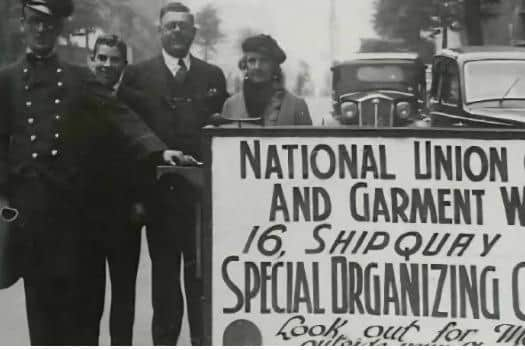
Her commitment to justice for workers, especially women, never faltered, in spite of the personal setbacks she suffered in a life devoted to trade unionism. As well as her role in the TGWU, she was secretary of the Tailor and Tailoresses Society and a member of the Shirt Making Wages Council. It was said that her activism led to her being denounced from the church altar. It didn’t stop her attending Mass.
In May 1939 Sarah Doherty was re-appointed as Secretary of the Derry branch of the ATGWU. She made a real impact locally, involved in negotiations around day to day problems on the factory floor. The decline in membership stopped. In July 1946 she told the Branch Committee that the number of members had doubled since June of the previous year.
Sarah Doherty kept working right to the end. She never married and she lived with her brothers at 133 Lecky Road. Her health failed and she died in a Belfast nursing home on the October 24, 1947, at the age of 63. She is buried in City Cemetery in Derry.
Gabrielle Deans, Sarah Doherty’s grandniece, said: “When I first began to look at the life of my great aunt Sarah Doherty I actually knew very little about her. I remember my father Tom mentioning her as he was also involved in building trade unionism, but not much else. So I was very pleased to discover how active she had been, and how she worked hard to get better conditions and pay for the factory girls especially. That attitude has come down through the years and the children, grandchildren and great grandchildren of her brothers and sisters still figure prominently in the political and community life of Derry to the present day.”
Daisy Mules, trade unionist, said: “Sarah Doherty was an active trade unionist for 33 years, before her death in 1947. As for many women of that era, little is known about her life, other than what was recorded in the Derry Journal and by word-of-mouth from relatives. She became involved in the trade union movement around the time of the Shirtcutters’ strike in 1913. She was also a member of Cumann na mBan. Several of her greatnieces and nephews are currently activists both locally in Derry and nationally in Ireland. It is absolutely fitting that she be remembered with a blue plaque, honouring her service to the shirt factory workers of Derry.”
Ulster History Circle chairman Chris Spurr says: “Sarah Doherty was a trade unionist who campaigned for women’s rights, but first and foremost she was a Derry shirt factory girl, one of the thousands whose working lives remain forever stitched through the fabric of the city. The Ulster History Circle is delighted to commemorate this renowned campaigner with a blue plaque on the building where she worked as a trade union Organising Secretary.”
The plaque, erected with support from Derry City and Strabane District Council and the Inner City Trust, is located at 16-18 Shipquay Street, BT48 6DW.